
Reusable Eco-Friendly Sanitary Pads have yet to take off in the market due to the lack of awareness regarding the product. Such pads are better than disposable sanitary pads in terms of quality, price and offer health and environmental benefits as well. The reusable pads are affordable compared to the regular disposable sanitary pads since one can save more than Rs 2,000 annually by reusing eco-friendly pads for up to two years.
Many families from Kalikatar are below the poverty line. And menstruating people from those families cannot afford to buy sanitary pads regularly. They need something that gives them the best value for their money – reusable sanitary pads. The cost per reusable pad is Rs. 200 per pad in the market, which is reasonable since one can reuse it for two years.
During the Lockdown, women of Kailash Rural Municipality were unable to buy and use sanitary pads during their menstruation. The unavailability of Sanitary pads led to the concept development of the Reusable Sanitary Pad Making Training Program by the Shangri-La Development Association (SDA). So that our mothers, daughters, sisters, and Hostel Girls will not develop infections and diseases by using contaminated clothes.
The reusable pads are cotton made, comfortable and absorbent, further lowering chances of rashes and infection. In addition to being cost-effective, reusable sanitary pads are also environmentally friendly since no plastic gets used in production.
The demand for eco pads in the country has increased lately due to the economic and health-related benefits.
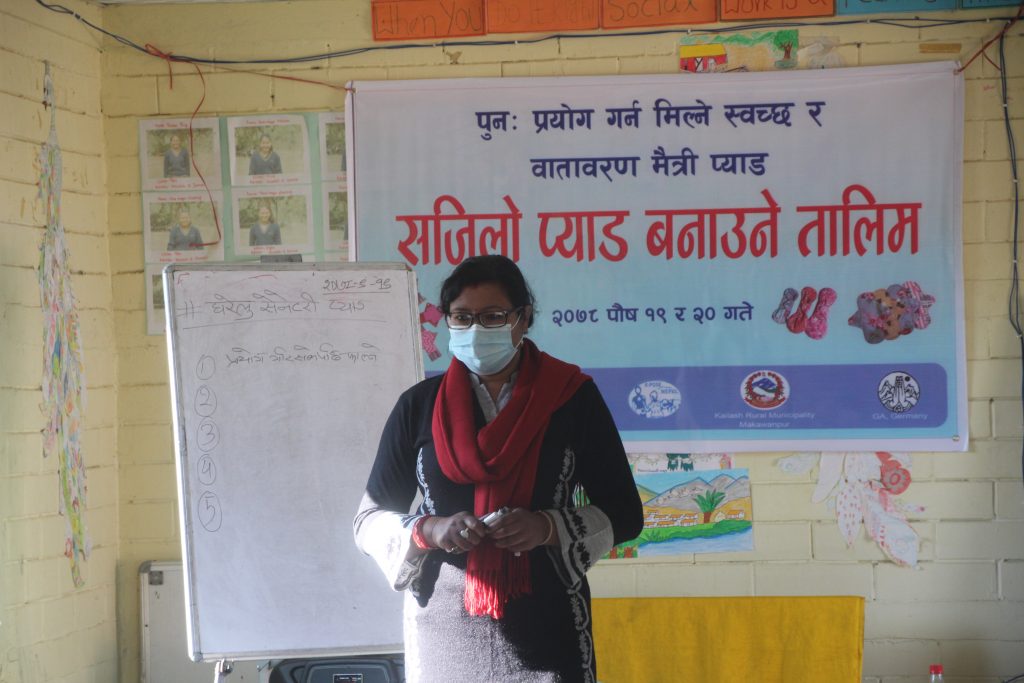
So intending to promote the use of reusable and eco-friendly sanitary pads during menstruation, SDA organized a Reusable and Eco-Friendly Sanitary Pad Making Training for two days under its Health Project at SDA Literacy Hall, KRM on January 3rd and 4th, 2022. The trainers for the program were Shreejana Kapali and Mina Maharjan from X-Pose Nepal, an NGO in Patan, Lalitpur.
Objectives of the training
To promote reusable sanitary pads during menstruation as a better choice for women of rural parts of Nepal.
To inform participants about the sanitary, and hygiene practices necessary during menstruation.
To create awareness regarding the cost-benefit and cost-effectiveness of reusable pads compared to disposable sanitary pads.
To encourage the use of environmentally friendly reusable sanitary pads.
To enhance women empowerment by providing the necessary skills and training required to make reusable sanitary pads utilizing local resources.
To aware local participants and stakeholders of the benefits and importance of reusable sanitary pads
To help reduce social taboos and change menstrual hygiene behavior.
The focused groups of the program were Female Community Health Volunteers (FCHVs), SDA hostel girls, frontline health workers from health posts in Kalikatar.
As per the statement given by X-Pose Nepal, 45% of the women population still use dirty clothes to clean themselves during menstruation, which leads to infections like endometriosis, ovarian cysts, even cancer of the uterine, cervical, and ovarian, to name a few.
Thus, the training was to provide KAP (Knowledge, Attitude and Practice) regarding safe menstruation to women of Kalikatar. With this training, the participants would learn to make reusable pads apart from implied knowledge on improving menstrual hygiene.
The first day of the training entailed a lot of consecutive activities. It kicked off with a formal program. Then, former SDA health staff introduced the concept of the training program followed by orientation from Shreejana Kapali ma’am talking about the importance of the training and how the reusable sanitary pads can bring changes in menstruation practice.
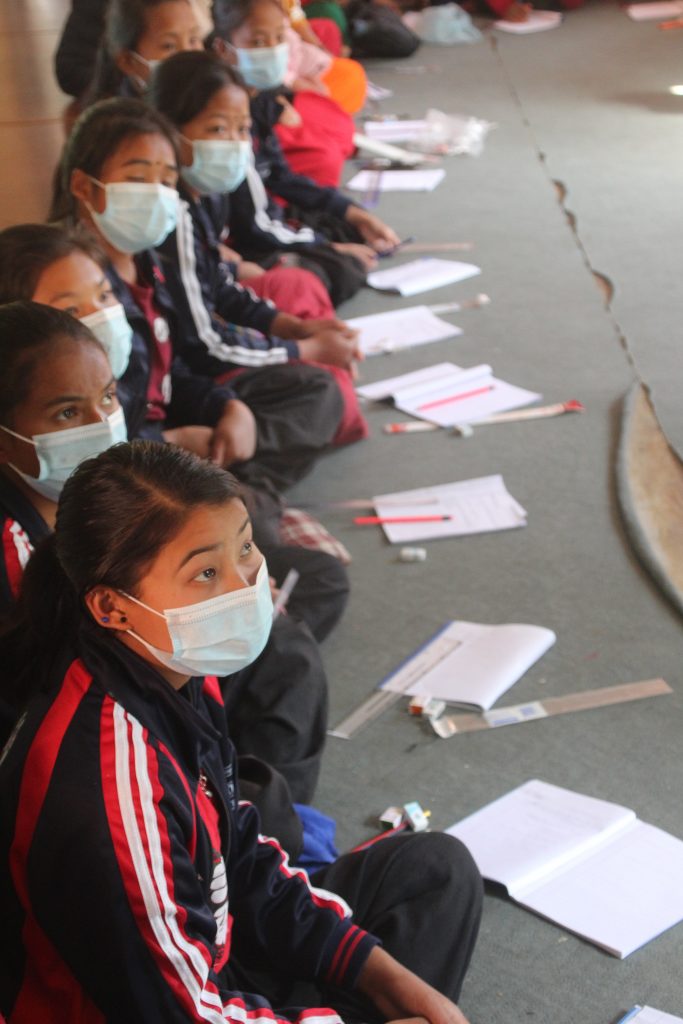
On the contrary, change doesn’t happen overnight. So, it was necessary to understand the perception of menstruation held by the participants. The facilitators took care of the tension in the room at the beginning of the training. They advised the participants to talk with no hesitation about something as natural of a process as menstruation. Eventually, there was an ease in the room, and everyone started sharing their thoughts and experiences with menstruation.
Afterwards, the draft preparation activity began, where the trainer provided information about pads and correct length and breadth. Participants made their first draft out of paper, which they later used as a reference for making the sanitary pad. Then they made their second draft out of regular cloth to familiarize themselves with the procedures of pad making. The training was entirely demonstration based.
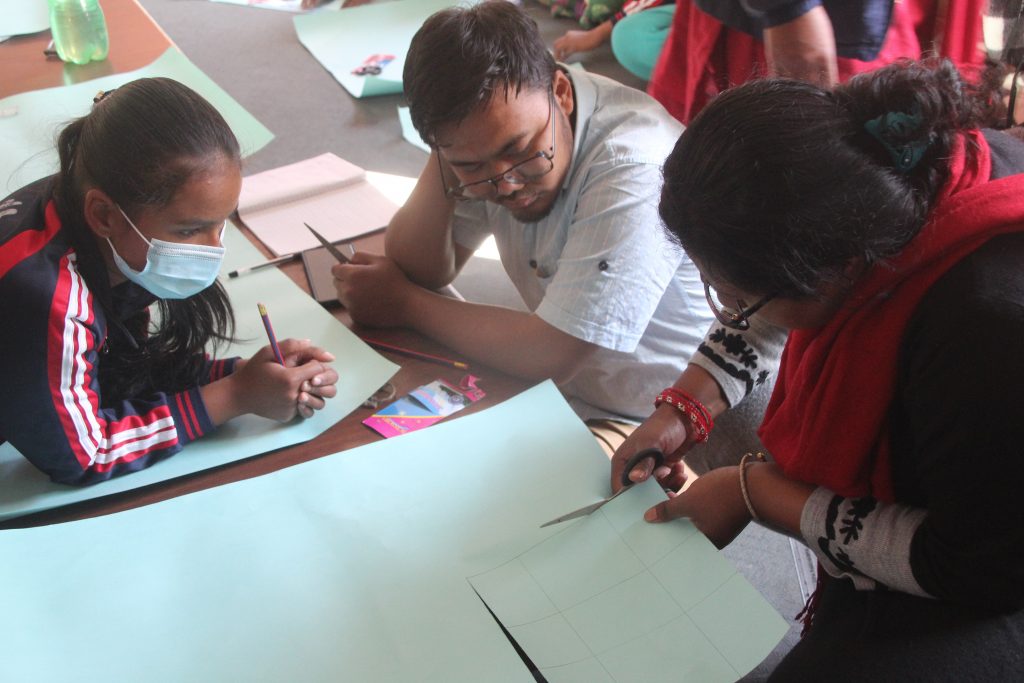
Following that, on day two, the first activity was the preparation of sandwich cloth, where the trainers handed necessary materials like measuring tape, color chalk, and scissors to the participants. Making of frame and holder were the main highlights of this activity.
Here, the participants cut the clothes according to the paper draft previously prepared by them. This session took about two hours since the participants were of a heterogeneous age category, which brought differences in understanding.
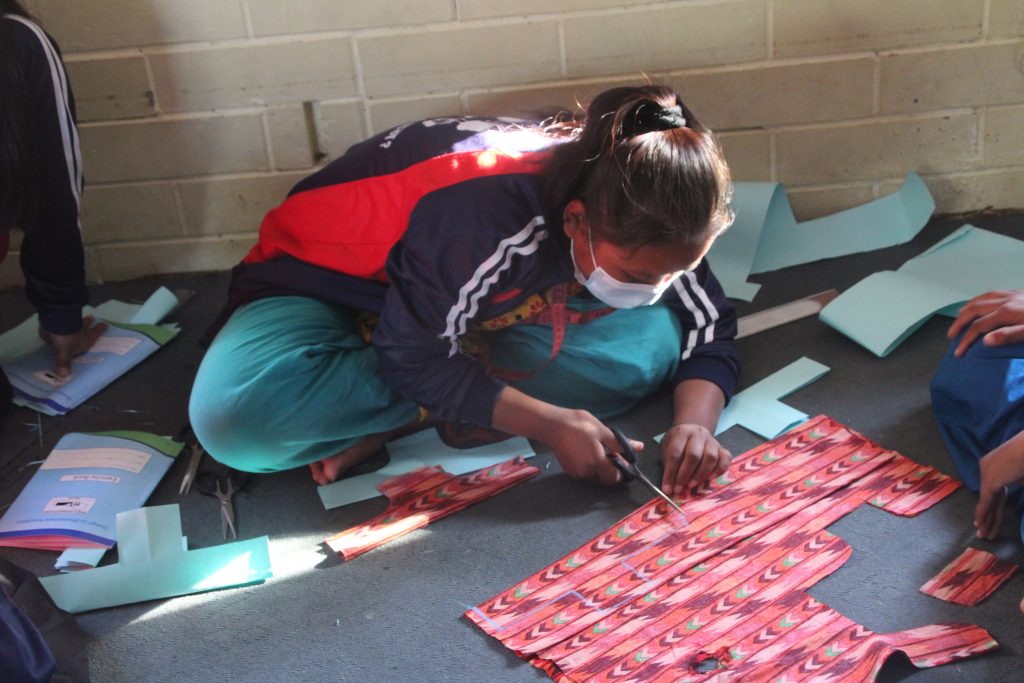
The next activity was sewing and stitching, where the previously prepared cloth sandwich was stitched in one piece by hand with the help of thread and needle. This session also took around two hours due to the unfamiliarity of many participants with the sewing and stitching.
The last activity of the training was the preparation of napkins by using microfiber cotton cloths since it helps absorb the blood during the period. The napkin is a changeable layer made separately, which is then folded and kept inside the holder.
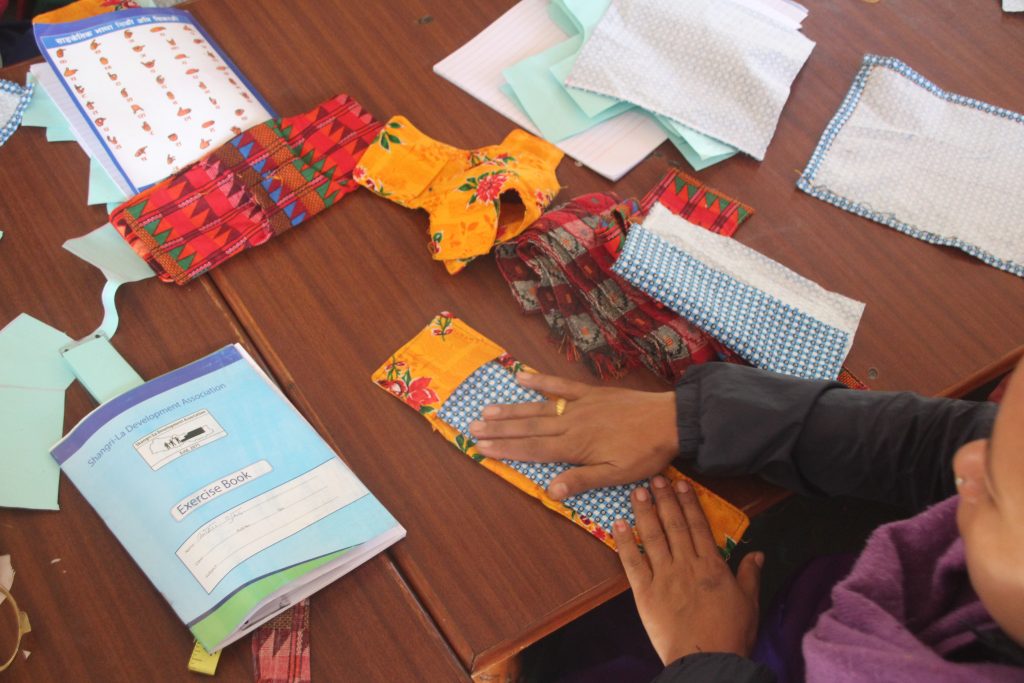
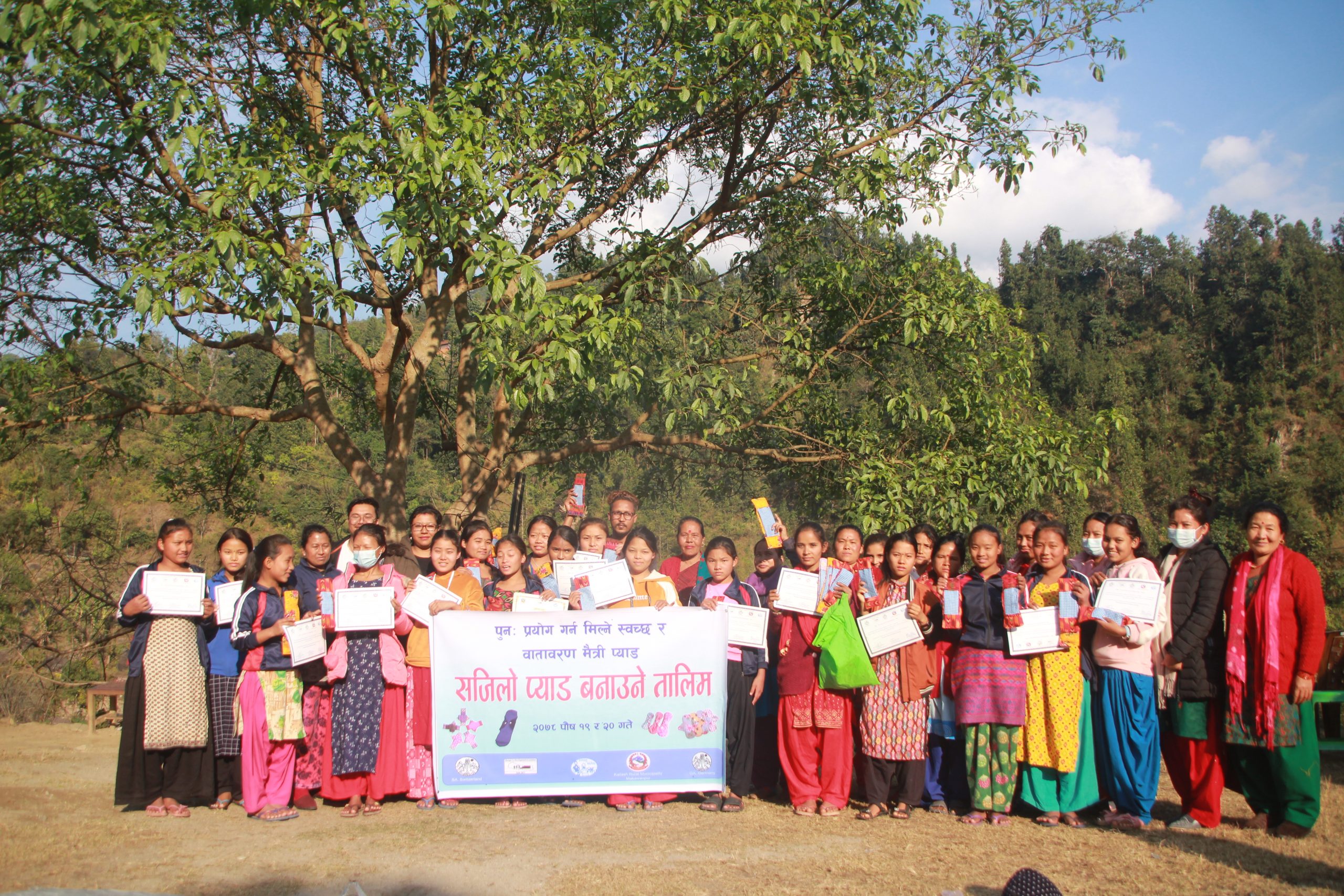
The two-day long training was a complete success. The participants and the trainers were given certificates for their dedication and enthusiasm. Moreover, the certificate is to validate the credibility of the participants should they decide to pass on their knowledge in the form of training.
By the end of the training, the participants fully understood the advantages of reusable sanitary pads from health, economic and environmental aspects. The program was a small yet significant step towards reducing social taboos & changing menstrual hygiene behavior.
Achievements
Resolute in prioritizing sustainability in all its projects, SDA’s determination in continuing the sustainable and environment-friendly spirit was apparent in this training.
Thirty participants: SDA Hostel Girls, FCHVs, and Health Post staff received the training and knowledge regarding menstrual hygiene. The women of Kailash Rural Municipality can save up to 5% of family income yearly by using reusable sanitary pads. The training empowered the women of Kalikatar with an eco-friendly income-generating employment idea.
While following up with the FCHVs and Health Post Staffs, they gave positive feedback and promised to conduct more awareness programs alike in days to come.
On top of all the hopeful outcomes, manufacturing reusable pads and turning them into a viable source of income is another great one for the women of rural places like Kalikatar. Likewise, Our SDA Literacy Home is now a disposable sanitary pad free zone.
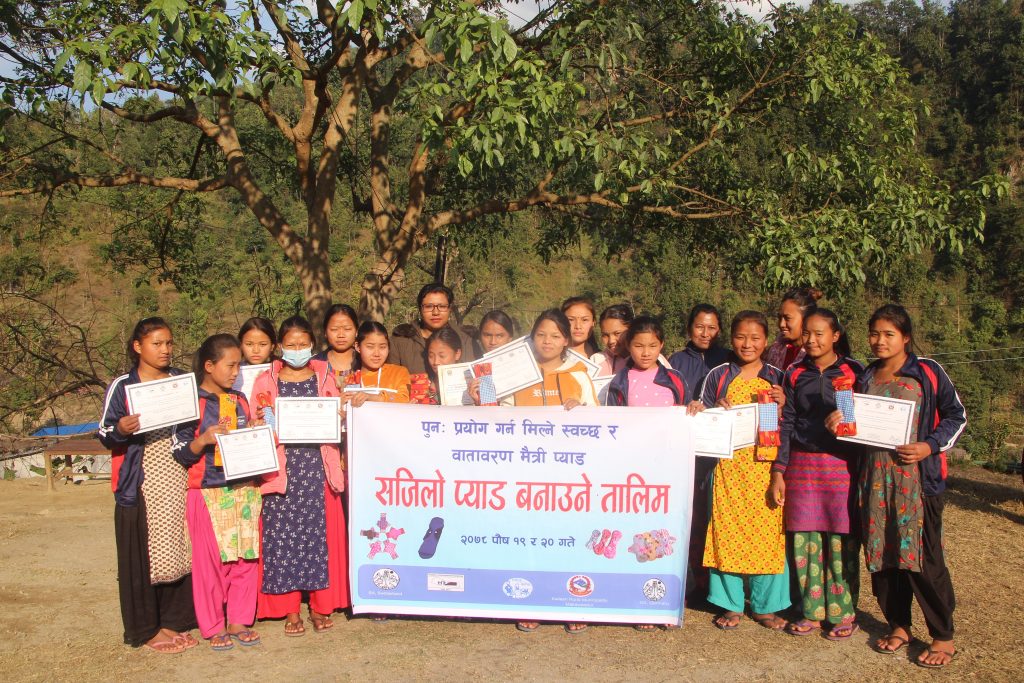
Furthermore, the local participants have become skilled in producing reusable pads. It will help reduce financial stress and change menstrual hygiene behavior for the better. Also, the participants are now aware of the sanitary and hygiene practice necessary during menstruation. The waste produced by disposable pads will be lower.
The training was a success, enhanced women empowerment and ensured the achievement of objectives established in prior. We are grateful to X-pose Nepal, former and current SDA Health staff, SDA Hostel Girls, supported Health Post In-charges, FCHVs and mothers group members for their valuable time and contribution to making the program successful.