10 Years of Impact: A Decade of Community Development, Emergency Relief, and Humanitarian Support
July 14, 2026
One Time Support Projects
View AllYou will be redirected to our partner organization's page.
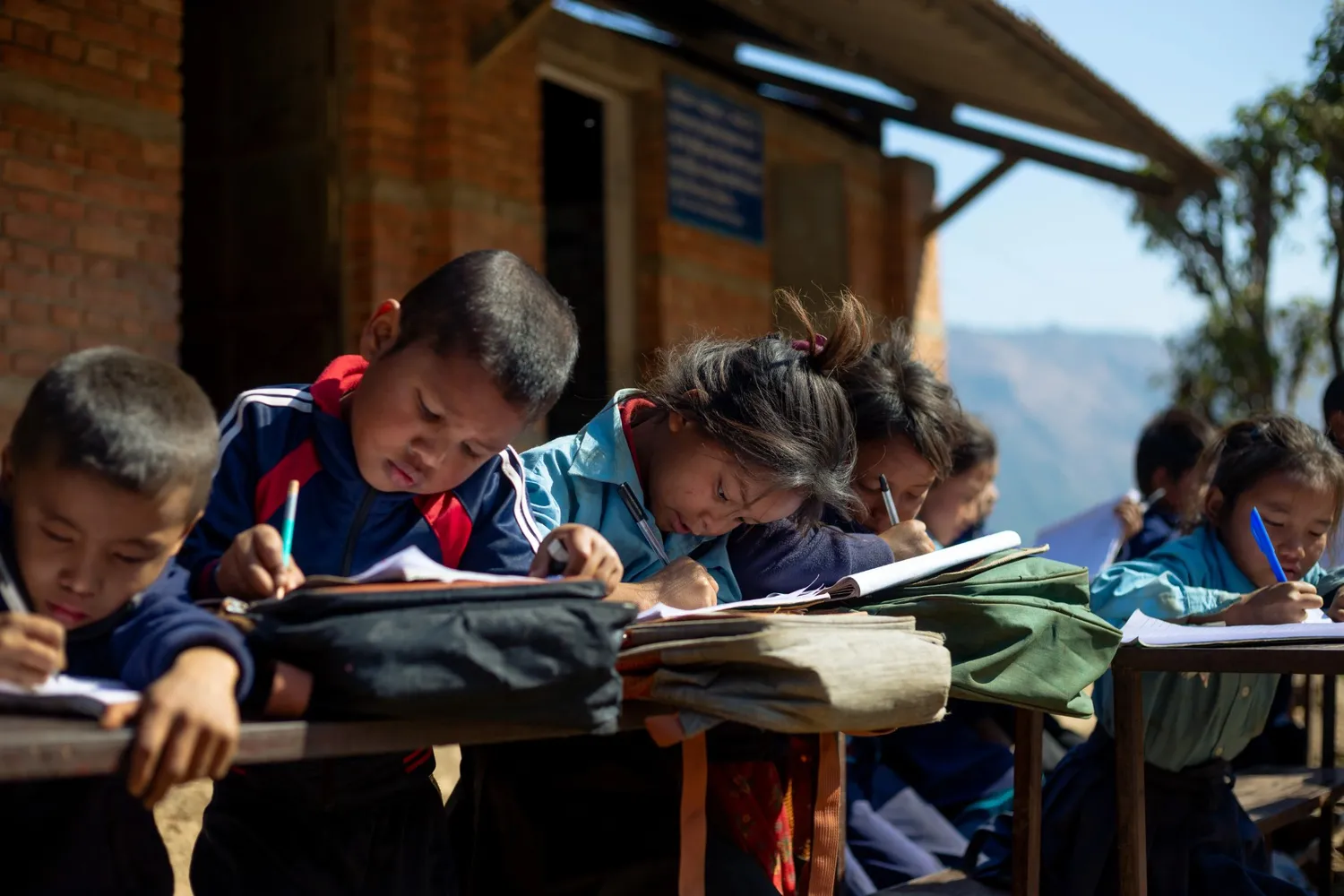
Often referred to as the gateway to the Karnali region, Jumla stands as a symbol of resilience and a deep connection to Nepal’s rural heritage. The district is today renowned for its many picturesque trekking destinations. But life remains difficult for someone born and brought up in the region. Its remote location presents unique challenges, especially for people with disabilities who hail from that region. Jumla isn’t just remote in the physical sense; travel in and out of that area is quite difficult, which means that it is difficult for most people of the area to make an easy living. On top of that, it is often the case that parents there do not have the right education to understand the special care and environment that people with disabilities require for a healthy psychological growth.
The Jumla Special Children Project (JSCP), which was taken over by Shangri-La Development Association in the year 2015, works within this special intersection of disability and ruralism. Working in collaboration with the local government of Chandanath Rural Municipality and Karnali Secondary School, the project provides schooling and a stable living environment to deaf children, offering them a chance to integrate into the society that might otherwise shun them. Since taking over the project, SDA has also hired multiple full-time sign language teachers to ensure that its children receive inclusive education.
With the chance to grow up in this supportive environment, JSCP graduates over the years have found themselves living a self-sufficient life — something that would otherwise be very difficult. Recently, an old graduate has taken up a job as a server in a hotel, far from his hometown, something that would have been impossible were it not for the education and skills he learned through the project.
Twenty-four-year-old Bal Bahadur Thapa hails from the same area in which the project is based — Chandanath Village Municipality in Jumla. Today, he works as a server and kitchen assistant in Hotel City Smart, an establishment situated in Birendranagar, Surkhet. His place of employment is situated some 230 km away from his home, and requires a commute by bus for around 15 hours.
Bal Bahadur considers himself fortunate for having such an opportunity, as he is completely deaf from birth. For him, a self-sufficient life such as this would have simply been impossible if he hadn’t joined JSCP at the young age of five. He came from a family that had severe hardships. His father passed away when he was just an infant, one of the many casualties of the Maoists’ Insurgency. To make matters worse, he wasn’t the only child; Bal Bahadur also had two sisters. Their mother had to take care of her three children and had no other options to make a living besides some meager farming. Because of this, she barely had enough to feed her family.
Between taking care of her children full-time, working the fields for a living, and the unforgiving winters of Jumla, their mother had a very hard time. She had to do it all alone. So, upon hearing about JSCP from her fellow community members, she was very happy to get Bal Bahadur admitted — it would mean that her son would have the chance for a better life, a secure childhood, and some of her burden would be relieved.
Living at the JSCP hostel provided him with the right environment and all the opportunities he needed to grow beyond his disability and become a capable individual. Living full-time around peers who shared his disability, he grew to develop a sense of companionship and thrived in their company. Learning sign language was the most essential part of his growth; he could finally communicate clearly with those around him. What’s more, there were also ample opportunities to interact with non-disabled students at Karnali School, with which he enjoyed a healthy personal growth, and experienced proper integration into society. Bal Bahadur left us at the age of 18, after graduating from Class 10.
By that age, he had understood the importance of a good education, and the value it held for him and his family. He still had his mother and sisters back home to take care of, and wished to reach a place in his life where he could overcome the obstacles created by his deafness and earn an income to support his family.
And so, he expressed interest in completing his schooling, and was sent off to Pokhara, where he completed his Plus Two education. In this way, he was able to gain an essential education, could read and write, and most importantly, learned that his disability didn’t have to define him; there were many skills he could learn to create value in his own life, and become a self-sufficient individual.
This latter part is an especially big challenge for someone like him, who was born in a remote area. In a location as remote as Jumla, it is near impossible for children with disabilities to have a favorable environment for growth, and the added support they need to grow into healthy, capable adults. With this understanding, Bal Bahadur recognizes the scale of impact that the Jumla Special Children Project has made in his life. “If JSCP hadn’t been in my life, I would still be in my village,” he says, “I would be living with my family and spending all my time at home. Without it, I would have been a helpless, valueless person, living an ostracized life.”
While grateful for the opportunities that he has received as a result of being part of the project, he also shares that his disability continues to be a daily struggle at work. “Being deaf makes it very difficult,” he said, “I have problems explaining things to other people with my sign language, and I cannot understand what other people say.” Not being able to hear and speak obviously comes as a huge disadvantage for someone working in the service industry. He cannot do his duties with complete independence, and he is unable to build an easy rapport with his customers. Thankfully, a coworker who understands sign language comes as a relief as they often interpret on his behalf. Besides that, he typically has to write down what he needs to say.
The job itself wasn’t easy to come by either. After completing his Plus Two education and parting with SDA completely, he was forced to stay home for about two years before he got the job. In that time, he helped out at home, and had no options to supplement his household income. But these daily scuffles with his disability do not affect him too much; he is simply glad to have the opportunity to make something of himself. “JSCP has made a great impact on my life,” he proclaims, “I am a deaf, disabled person who is capable and confident today. It taught me that I can make a living of my own, even if I have this disability — I have that vigour in me today. The education and skills I learned from this place has given me a strong mentality and a faith in myself.”
By this time in his life, Bal Bahadur has experienced different facets of life, and has also learned what it feels like to overcome hurdles to achieve something. He hopes that the hard-earned job will open new avenues for him, and pave the way for a better future for him and his family. He is happy to report that he is already sending small amounts of money back home to his mother, and hopes that it makes life easier for her; at this age, isn’t capable of the hard labor required to tend to the field.
There are many others like him in Nepal who have been deprived of equal opportunities due to the lack of right support. While the Nepal government has taken some steps, a lot remains to be improved. Despite many struggles along the way, the Jumla Special Children Project has given some individuals a definite hope in themselves, and in the power they hold over their lives.