
Shangri-La Reconstruction and Development Project (SRDP) came about as one of the aftermaths of the second big earthquake on May 13 2015.
A meeting was being held on that day to plan the possibility of other projects. The reconstruction projects did not exist until then, and the team had just completed the relief fund distribution project.
The earthquake shook everyone to the point where they immediately commenced the post-earthquake reconstruction projects. The current Chairperson of SDA named the project SRDP.
Inner workings of SRDP
For SRDP, the decision was of the house owner regarding the size and structure of the house. House owners contributed 20% of the construction for their respective houses through labour or food and snacks or by providing materials from the earthquake-damaged homes.
20% contribution was not mandatory for all beneficiaries of SRDP and entirely depended on their affordability. The homeowners contributed 11% on an average which was still higher than what was expected by the SRDP team. The cost for the houses constructed under SRDP differed depending on the modality
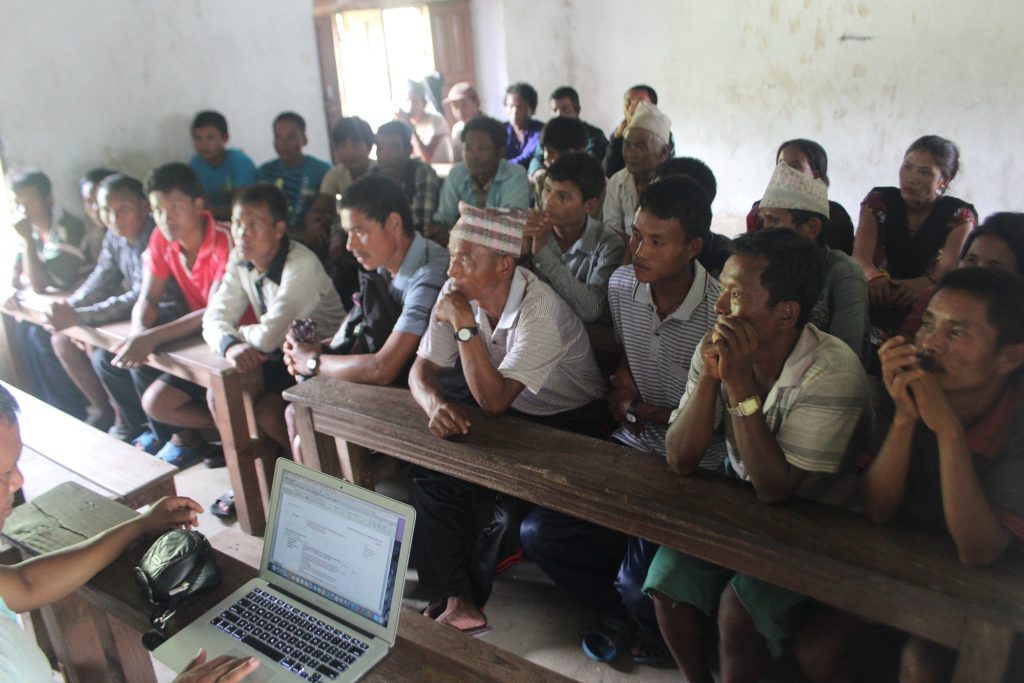
SRDP team ensured involving owners in the design, laying of the foundation, and construction of the houses to provide the house owners with a sense of ownership. Apart from that, SDA wanted the house owners’ involvement so that they could make decisions that felt right to them as the house owners.
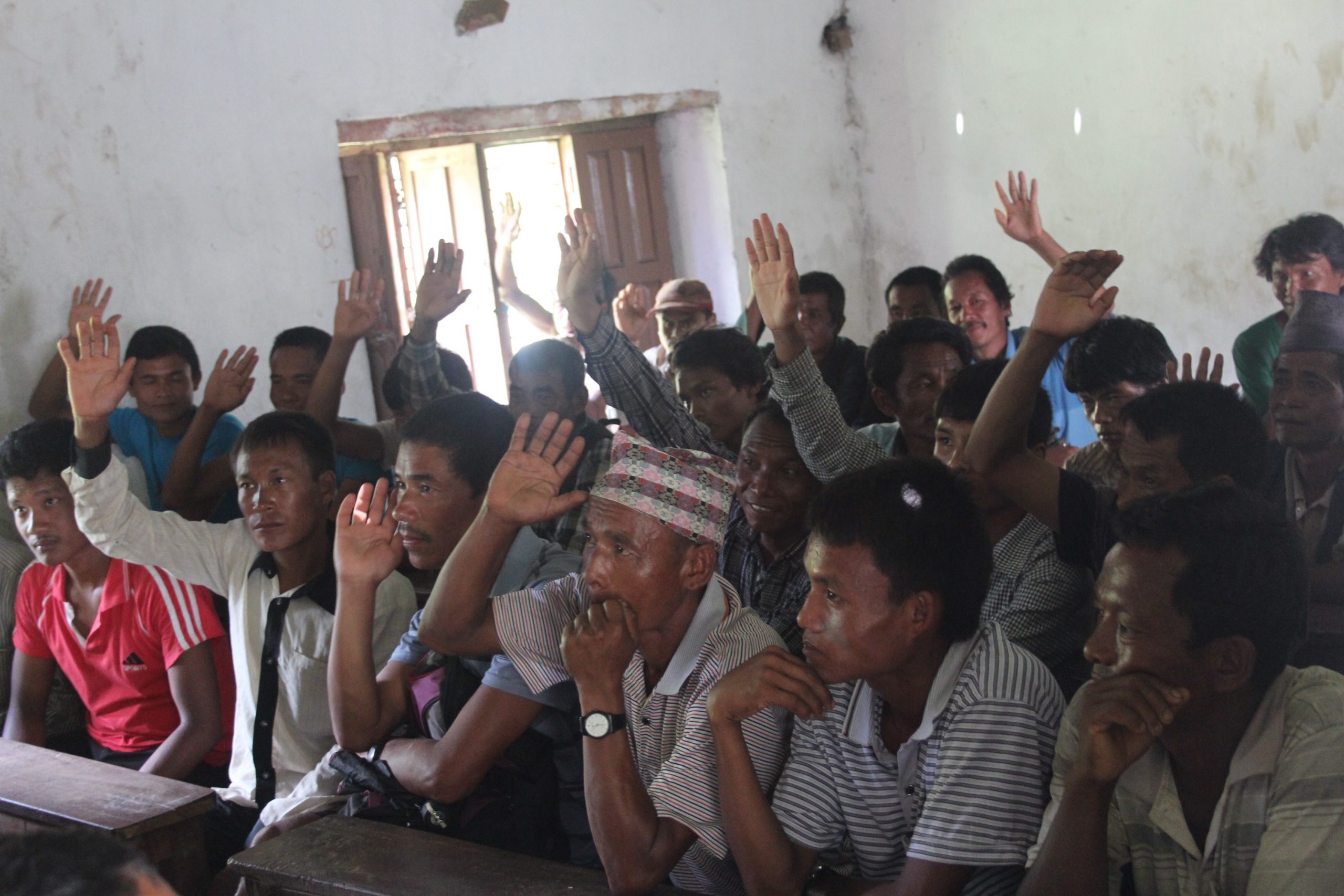
The SRDP team provided the homeowners with options of three house designs. There was some voting done in the community as well.
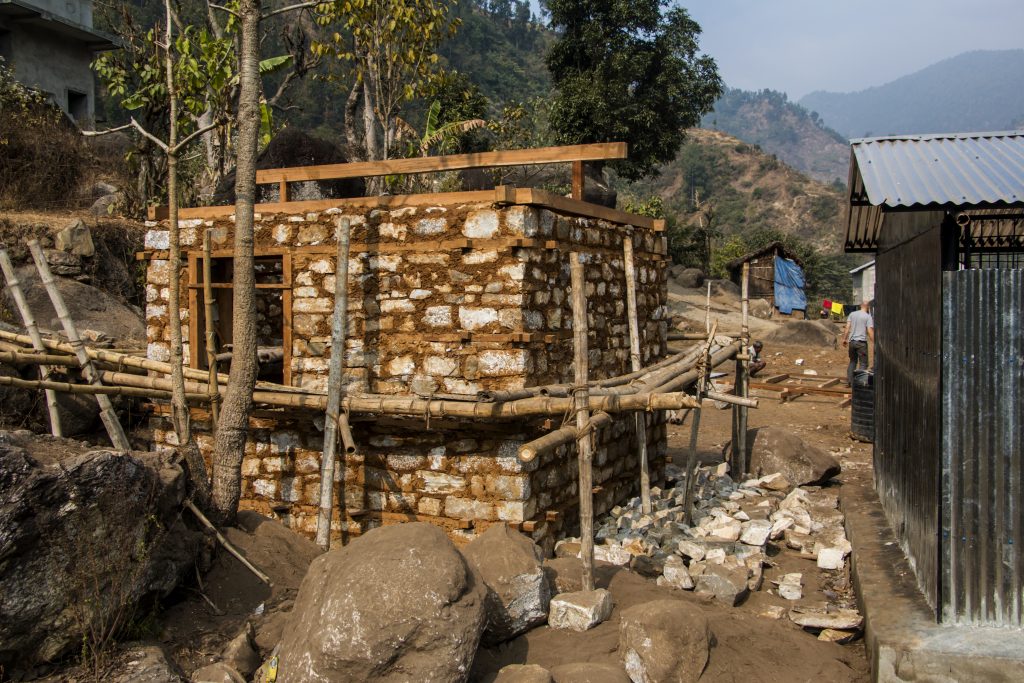
The kitchen in the Literacy Home is the first model house under SRDP. After building the first model house, which was on new year’s eve, the team sat for hours to set the seal on the design of the building with lesser care for the new year’s celebration. They put the New Year celebration on hold for the discussion.
“We danced for a while after concluding the meeting and went off to catch up on our sleep,” the SDA Chairperson adds, reminiscing the reconstruction days.
Most organisations opt for contracts for building by opening a tender for bidding. But the SRDP team hired technical consultant teams of engineers and deployed staff of SDA for reconstruction projects. With this approach, the team could confirm quality assurance and lower the overall costs.
The Swiss and the German board were equally involved in the reconstruction process from the beginning of the project. Not a single design would change without consulting with the team inside the country and abroad. Everyone involved coordinated with everyone else for the smooth sailing of the post-earthquake reconstruction projects.
School Building Reconstruction and Education Support Project (SBRES) had separate teams for each school building project. The team would update the project every week on Friday. And at times, the reconstruction projects meetings would run past midnight.
The meeting hall was never silent since everyone would be busy discussing and bouncing off ideas. The meetings would go for long hours so that the team involved could come out of it with solutions to every problem brought up.
The SRDP team aimed to complete the reconstruction before the monsoon to help spare the house owners from heavy rainfall and floods.
Result of Reconstruction Projects
After completing the reconstruction project, the SRDP team went to the District Program Advisory Committee (DPAC) meeting in Makwanpur.
“You did such an excellent and appreciable job, but we are in a bit of a pickle because we cannot outdo what you did with the reconstruction projects work,” a government official acknowledges the work of the SRDP team during the DPAC meeting.
He further adds, “the people who got their houses built under SRDP are the luckiest, but the additional people from the community won’t have the same fortune as them with a limited budget from the government. And when other organisations come with projects alike, they most likely won’t be able to pull something of this scale.”
The post-earthquake reconstruction projects pushed the local government bodies into a tricky situation because they could not justify their inability to provide well-built houses to earthquake-affected families who were not beneficiaries of SRDP.
The reconstruction projects of that scale came along with work-induced stress for everyone involved, but it eventually transformed into satisfaction once the project ended.
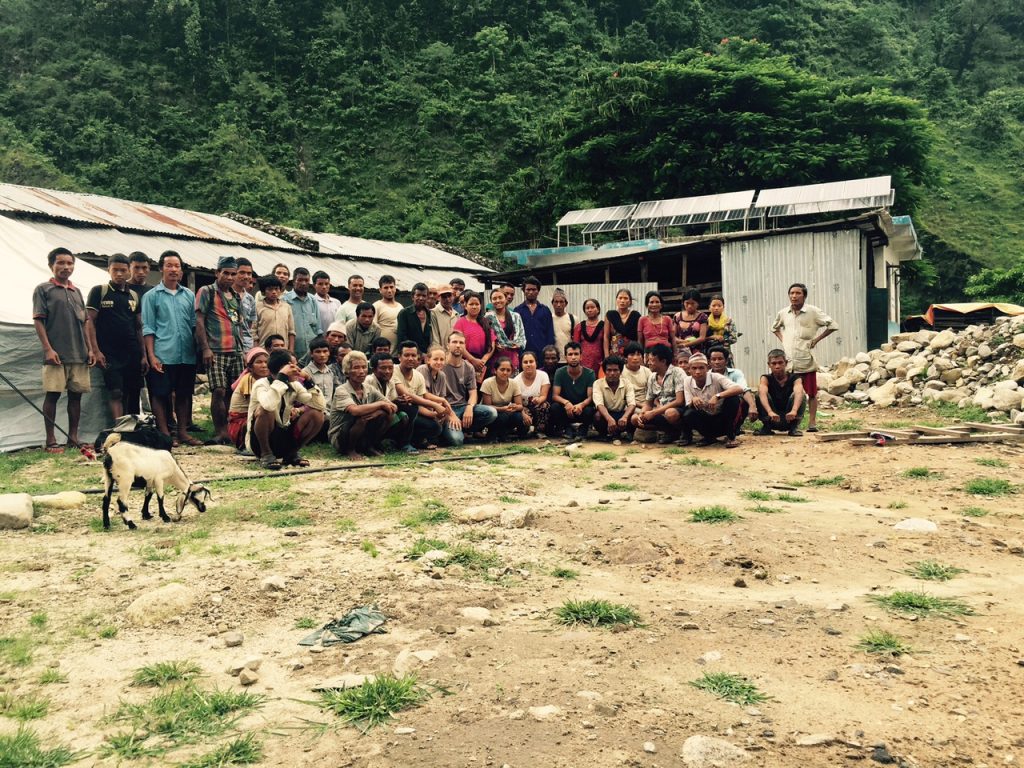
During the initial phase of the SRDP, the locals would barely show up for the community meeting. This phenomenon took a u-turn, and for which, without doubt, the reconstruction projects are one of the major influencing factors. So now, whenever SDA organises programs and events, people from the project area show up.
SRDP paved the way for the engagement with the community people and motivated them to participate in training and programs conducted by SDA.
SDA was running its activities under its three projects of Education, Health and Agriculture simultaneously while working on reconstruction projects. It proves the determination of SDA as an organisation working to improve the impoverished lives of rural Nepal.
Laxmi Sunar Bishwokarma – A Beneficiary of SRDP
Among many such lives, Laxmi Sunar Bishwokarma is one of them. Her husband works as a blacksmith, and they have two sons and a daughter.
Her family, unfortunately, followed the same fate as their ancestors. They do not have a land ownership certificate for the land they have lived for decades now.
After the earthquake, while the SRDP team was looking for deserving beneficiaries, they came across Laxmi, talked to her, understood her situation as a landless person with a family and advised her to buy land.
The team also talked to the previous landowner to ease the process of buying new land for Laxmi. Her family then bought a small land in the husband’s name to build a home under SRDP. After that, the SRDP team constructed a house for her on land on which her family finally has a land ownership certificate.
Laxmi believes that getting the land ownership certificates was only possible because of SDA. She further clarified that no government officials or representatives approached to help her.
But, her living situation now is similar to Durga Bahadur Praja, whose story appeared on one of our blogs in April titled At Risk Relationship: Indigenous Community and Land Rights.
Having land ownership holds a great significance for me because it provides one with the option to have a place to live and rightfully claim the land,” Laxmi adds with a sigh of relief.
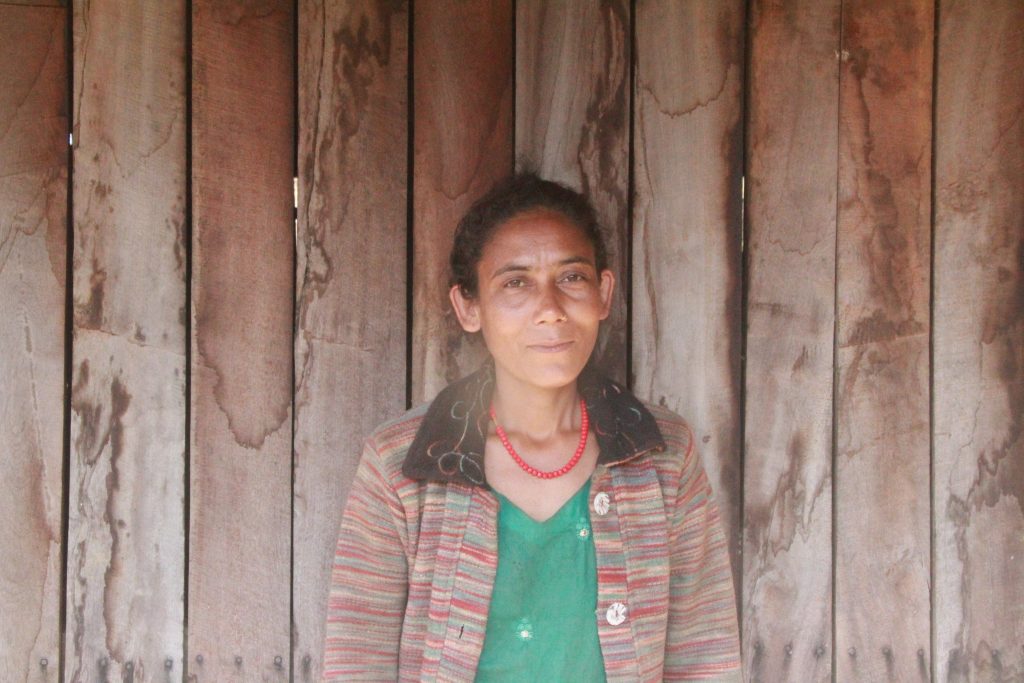
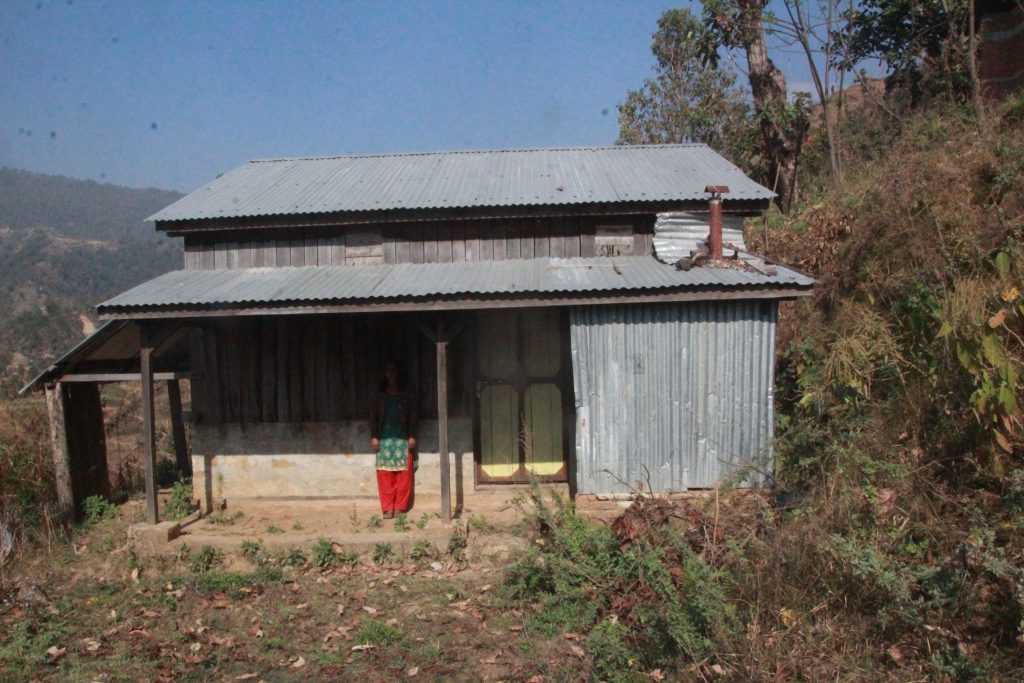
Her family is the only Dalit family in Sarsi, Bilauni, Dokotar and Tamlang of Kailash Rural Municipality. She and her family have faced and continue to face caste-based discrimination in the locality.
“I don’t know how to word it, but there are displeasures I would want to express to the authority figures who claim to work in uplifting the Dalit community,” Laxmi adds with frustrations.
Her longingness to live around people from her community questions communal harmony, no? Perhaps, it is about time the privileged ones stop overlooking the lives of the disadvantaged.
“It won’t be the same as being with people from my community no matter how coexisting the locality seems to be”, Laxmi shares her lived experience as a woman from the Dalit community.
Laxmi Sunar Bishwokarma, now a rightful landowner, expressed her gratitude to SDA with a hopeful smile, for she has a place for her family.