10 Years of Impact: A Decade of Community Development, Emergency Relief, and Humanitarian Support
July 14, 2026
One Time Support Projects
View AllYou will be redirected to our partner organization's page.
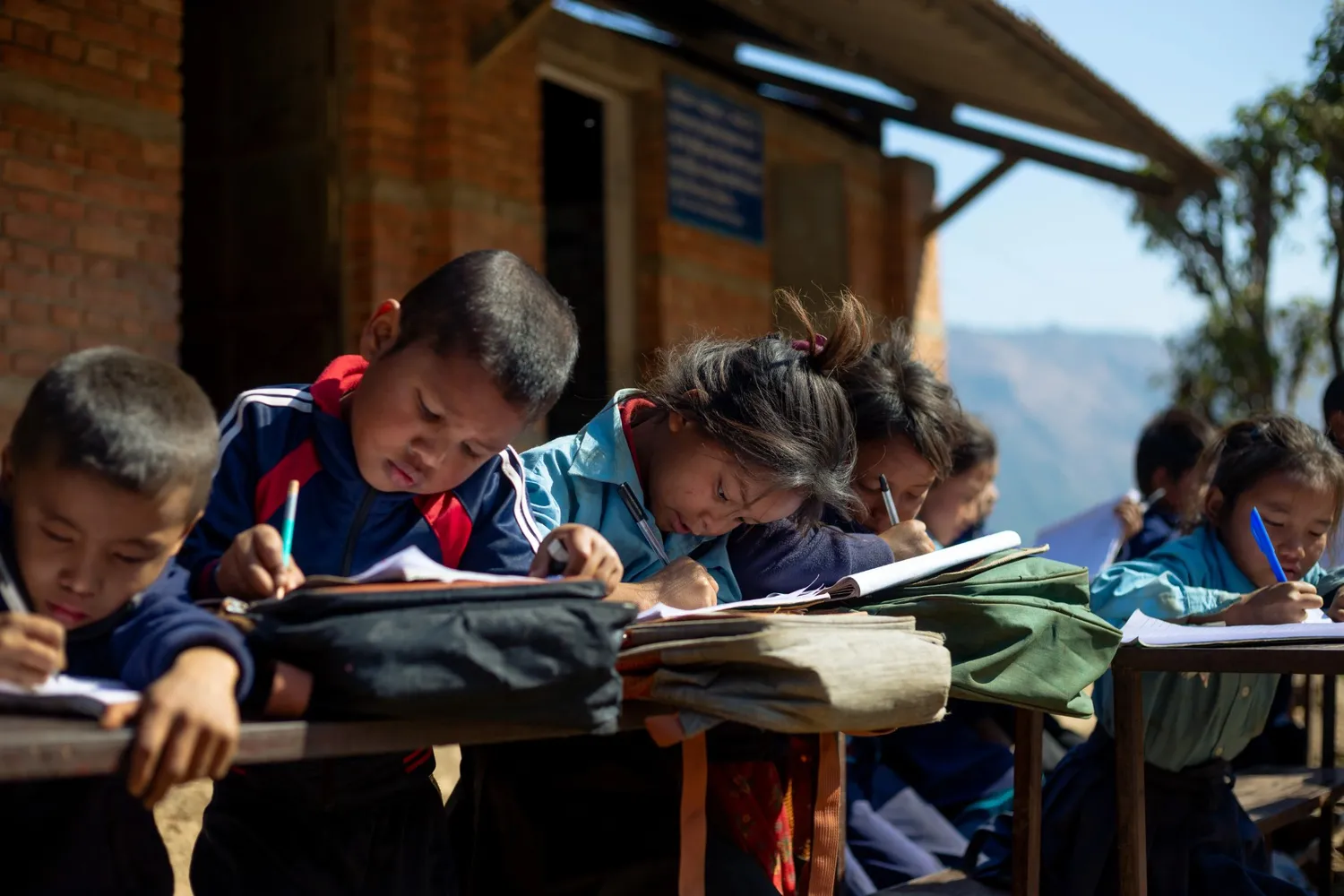
Have you ever met someone who defied the odds and accomplished something seemingly impossible? We have- her name is Bhawana Shahi. Bhawana was born and raised in Tilagufa Municipality in Kalikot district, one of the impoverished and most deprived parts of the country. By birth Bhawana was deaf. If the list of her adversity was not enough, she also comes from one of the most underprivileged families. She has eight siblings among which 3 of them are deaf from their birth. All of that and also enjoying their basic rights become challenging.
When faced with adversity, most people give up and succumb to their difficult circumstances. But there are always a few who find the strength to rise above their challenges and excel in their field despite all odds. This is the story of one such person. This is the story of Bhawana Shahi.
For as far and remote the place is, the more the radio shows its importance. One day when Bhawana’s parents were listening to the radio, they heard the advertisement for this special school that takes admission of persons with deaf. They knew immediately what could be the next step for the family. Bhawana was admitted to this school. At that time, the school was supported by the Nepal Government for the education and accommodation facilities for children with disabilities. The government used to provide deaf children with 2,000 rupees per month as an allowance. With rising inflation, the government increased it to 4,000 rupees per month. That amount, however, is used for daily food consumption.
The school housed two types of students: children with disabilities and children without disabilities. Later, noticing that children were unable to catch their teachers and peers, the school administration requested on behalf of the deaf pupils that the local government construct a facility where such students could read and write with ease.
“Bhawana is the person you want to support because she comes from a low-income family and is also deaf.” She has always excelled in her education and other extracurricular activities for the period I have known her. As a result, I feel she should be given additional opportunities and platforms. “Investing in her future will always be worthwhile,” says Mr Hari Budthapa, Coordinator of the Jumla Special Children Project (JSCP).
Mr Hari is originally from Jumla. He has been a member of the JSCP since April 2016. Hari received Nepali Sign Language training soon after joining SDA to ensure that there is no language barrier among the students. He is the JSCP’s primary contact and serves as a mediator for SDA by communicating students’ requirements and support.
In 2016, the Shangri-La Development Association (SDA) partnered with Shree Karnali Secondary School. The goal of SDA’s approach to this school was to intervene in the pre-existing integration of abled and children with disabilities classes. Feeling the need to do more for deaf students like Bhawana, SDA launched its project, which provides clothes, stationery materials, academic and library books, safe drinking water, sports materials, and field trips. This is the same school that Bhawana attends. This is the school where JSCP operates. And it is here that SDA has been collaborating with the school since 2016 to administer the JSCP for the betterment of students who are often looked down upon by many.
Shangri-La Development Association has appointed four additional teachers to work with deaf students. These teachers’ enrollment includes Nepali Sign Language training. Language training, on the other hand, is provided by the school. SDA has also hired one aaya didi for special care.
Bhawana has consistently outperformed her peers academically, and she is frequently asked to assist the other students in her class. This made it easier for Bhawana to connect with her classmates and teachers. She never lets anyone’s negativity affect her because it has always inspired her to grow. She gradually started understanding the importance of education and that knowledge was something no one could ever take from her. She wisely chose education as the best path to a better future and worked hard to excel in her studies. She is well-known for her wonderful nature, resilience, and manners. She maintains her composure around her teachers and friends. She does, however, find it difficult to communicate with her parents at times. Both parties are unpleasantly conscious of her deafness. It is critical to recognize that parents from remote regions with illiteracy are not recognized to comprehend such adversity. They have no idea how much extra love and effort they require.
She aspires to be a TEACHER because she is passionate about education and consistently ranks in the top three of her class. Unlike many people who see teaching as an option for money-making, Bhawana is certain she wants to pursue a career in teaching so that she can help children with disabilities like herself.
She attributes her inspiration to the school and the Shangri-La Development Association. These are two organizations that have always believed in her aspirations and presented her with benefits she wouldn’t have imagined if the school and SDA had not intervened in her life, and how!
In Bhawana’s words, she wishes to be educated enough to work for the welfare of deaf children, providing basic facilities and other necessities, similar to how SDA has supported the JSCP to date. This, in her words, is what she hopes to be doing ten years from now.
At some point in the conversation with Bhawana, she got emotional. She shared that she sometimes wonders what her future would have been like if she had not been admitted to this school. How she would grow uneducated, like her parents, and how helpless she would be, like the majority of persons with disabilities in Nepal. One of the few reasons Bhawana appreciates her parents.
Bhawana has been labelled “the precious jewel” of her school. Mr Hari, the JSCP Coordinator, is proud of Bhawana’s modest success and wishes her greater help in the future. Mr Hari desires Bhawana’s dream of being a successful educator for deaf children to come true. He believes Bhawana’s tale exemplifies the power of perseverance and drive
Bhawana is convinced that if the Shangri-La Development Association is not there at Shree Karnali Secondary School, there will be no Jumla Special Children Project. The establishment of the project in this school has encouraged the idea that all children are capable and special in their own ways. As a result, Bhawana feels “BELONGED”
Between 2016 and 2023, 16 deaf children passed the SEE (Secondary Education Examination) at Shree Karnali Secondary School, and 34 more are now enrolling. SDA has helped 40 deaf kids in total. Six students took the SEE in March 2023 and then departed the school
Bhawana’s tale is a striking reminder of the power of resilience and propel to succeed in the face of adversity. While financial resources and external support can have a significant impact on an individual’s success, the will to succeed is ultimately the most powerful factor. Bhawana’s tale reminds us to have faith in ourselves and never give up, no matter how difficult our circumstances may be. We can make the most of whatever difficult cards life has dealt us by striving to be the best version of ourselves and working our way towards our goals.
So, the next time you doubt yourself or compare your life to that of famous people or your friends, remember Bhawana’s story. Despite all odds and adversity, she refuses to give up because- Never Say Never!