10 Years of Impact: A Decade of Community Development, Emergency Relief, and Humanitarian Support
July 14, 2026
One Time Support Projects
View AllYou will be redirected to our partner organization's page.
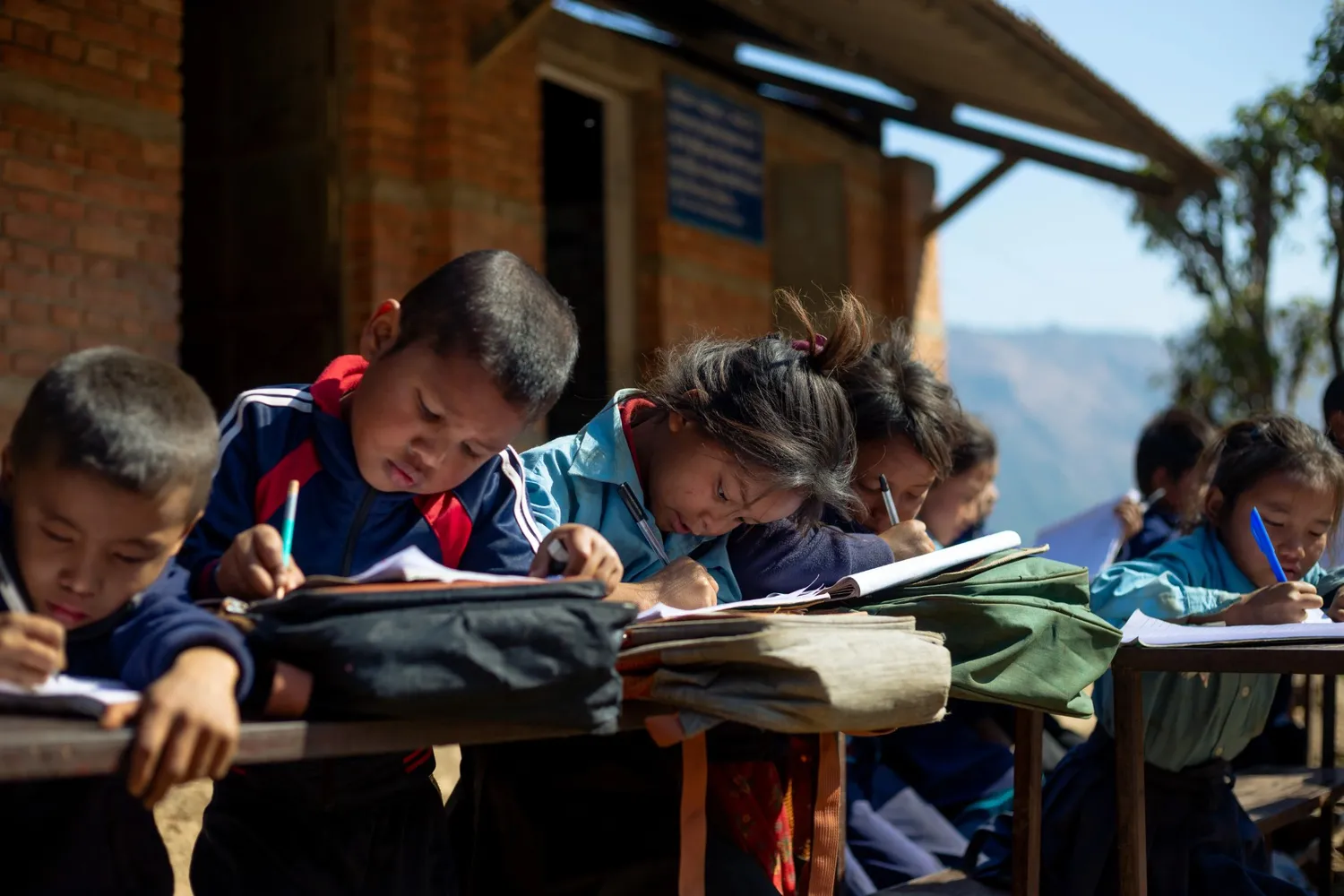
Your day begins early, often before the sun has fully risen. You walk long distances to school along narrow forest trails and uneven paths that wind through hills and scattered settlements. Some mornings are cold, some are wet, and some are unbearably hot. By the time you reach school, you are already tired. The classroom awaits you, but so does thirst. There is a tap somewhere on the school premises, but the water supply is irregular. Sometimes the water is muddy, and sometimes it does not flow at all. Washing your hands before eating or after using the toilet is not always possible. In small moments like these, learning becomes secondary to survival.
In Nepal, water scarcity, or rather, unequal access to safe water is not a new story. In cities like Kathmandu, families have stood in long queues for water for decades, relying on tankers and private suppliers. Water has shaped daily life across generations. In districts outside the Capital Valley, especially in rural and historically marginalized communities, the struggle looks different. In places like Kailash Rural Municipality, the problem is not always the absolute scarcity of water. Rather, it is the lack of technology, infrastructure, and knowledge to ensure that water is safe, accessible, and appropriate for use and consumption.
Water is a foundation for health and dignity. It is fundamental to life, but for children, it is also deeply tied to dignity, health, emotional well-being, and learning. When safe drinking water is unavailable, children are more vulnerable to waterborne diseases such as diarrhoea, typhoid, and jaundice, which weaken the body and often lead to repeated absences from school. Over time, this affects academic performance and increases the risk of dropping out altogether. The impacts are not only physical. Constant illness, fatigue, and discomfort take a mental and emotional toll on children. The stress of unmet basic needs quietly undermines confidence and concentration. For girls, the absence of adequate water and sanitation facilities is particularly challenging. It affects menstrual hygiene management, participation in school activities, and sometimes the decision to continue attending school at all.
Globally, these challenges are recognized under Sustainable Development Goal 6, which calls for ensuring the availability and sustainable management of water and sanitation for all. Despite steady progress, billions of people worldwide still lack safely managed drinking water and sanitation services. Nepal’s situation reflects this global reality. While national figures suggest that a large proportion of households have access to basic drinking water sources, access to clean and safely managed drinking water remains limited. According to national surveys, in rural areas of Bagmati Province, where Kailash Rural Municipality is located, only a small percentage of households use safely managed drinking water. Most households rely on water sources contaminated with E. coli, and only a fraction treat water before drinking. These statistics are not abstract; they appear in classrooms where children fall sick, miss lessons, and struggle to keep up.
When we talk about quality education, we often focus on textbooks, curricula, teacher-student ratios, classroom infrastructure, or digital learning tools. While these are important, education cannot be understood in isolation from the conditions in which children live and learn. A child’s ability to learn is inseparable from their health and well-being. One often-overlooked indicator of a quality learning environment is access to clean and safe drinking water. Without it, even the best curriculum falls short. A child-friendly school is more than a physical space; it is participatory, inclusive, protective, and responsive to the needs of all children—girls and boys alike. It supports nutrition, health, and emotional safety. It connects classrooms with families and the wider community. Most importantly, it nurtures children as confident, happy, creative, and empowered individuals. Child-friendly schools are schools for life, and water lies at the heart of them. Without access to safe and adequate water, even the most well-intentioned school cannot fully meet these ideals.
Nepal’s legal and policy frameworks recognize the importance of water in human development. The Constitution of Nepal, under Article 35, guarantees every citizen the right to access clean drinking water and sanitation, recognizing it as fundamental to health. Article 30 further affirms the right to live in a clean and healthy environment. At the policy level, the Sixteenth National Plan emphasizes improving physical and social infrastructure, including drinking water and sanitation facilities in educational institutions. Yet despite these commitments, implementation remains uneven, particularly in remote and marginalized communities where institutional neglect has persisted for generations.
Recognizing these gaps, Shangri-La Development Association (SDA) has worked since 2014 to support marginalized communities through its flagship programme, the Shangri-La Sustainable Local Initiative (SSLI). Implemented continuously over multiple phases, SSLI has evolved through learning and close engagement with communities, particularly Chepang communities in Makwanpur District. Now in its fifth phase, SSLI-5 adopts an integrated approach across education, health, WASH, livelihoods, and community empowerment. Previous phases have demonstrated tangible results, including reduced dropout rates, improved toilet coverage, and better child health outcomes.
SDA currently supports community schools in Kailash Rural Municipality, which run mid-day meal programmes that provide balanced nutrition using locally grown vegetables, fruits, and grains. However, the lack of proper school taps has limited the effectiveness of school health screening and WASH awareness programmes. While children are taught about handwashing and sanitation, the absence of functional taps makes it difficult to translate knowledge into daily practice
To address this critical gap, Shangri-La Development Association (SDA) is implementing the construction of child-friendly school taps in selected schools of Kailash Rural Municipality. These taps are designed to be age-appropriate, easy for children to use, and suitable for the local context. Where required, water purification systems are installed to ensure compliance with national drinking water quality standards. The taps are strategically located within school premises, particularly near toilet facilities, to encourage regular handwashing and improve hygiene practices among students. Beyond physical infrastructure, the intervention includes hygiene and sanitation awareness programmes, along with training for school staff and community members on the proper operation and maintenance of the water systems. Regular water quality testing is conducted to ensure safety, and schools are supported in developing sustainability and maintenance plans to ensure long-term impact.
This initiative is implemented in close coordination with School Management Committees and local governments. Local engineers are involved in the survey, design, and estimation processes, while community members actively participate in construction and monitoring. Parents contributed by transporting sand, stones, cement, and other materials, their hands shaping not just the taps, but the foundation of a healthier school environment. This participatory approach strengthens local ownership, builds technical capacity, and increases the likelihood that the facilities will be maintained even after project completion. At present, the construction of child-friendly taps has been successfully completed at Shree Praja Utthan School, Shree Nandikeshore School, and Shree Satyadevi School and is ongoing in two other schools.
The impact of these interventions is already visible at the school and community levels. Kalpana Praja, Principal of Shree Praja Utthan Primary School, Kailash-04, Dhusrang, shared that although the school previously had a water tap, it was not child-friendly. Since the installation of the child-friendly tap, students can now use water easily on their own. This small change has led to significant improvements in daily hygiene practices and overall cleanliness in the school. On behalf of the entire school community, she expressed sincere gratitude to SDA for supporting them with this much-needed facility.
Students have also felt the difference. Miron Praja, a Class 2 student from the same school, shared, “We have a new tap in our school, and it is very easy to use. Me and my friends now remind each other to wash hands.” Parents have similarly expressed relief and appreciation. Inimaya Praja, a parent from Kailash-04, shared, “I feel relieved knowing that my child has access to safe water at school. I am very grateful for this support, as it directly contributes to the well-being of our children.”
While the project is grounded in local realities, it also aligns with broader national and global commitments. It contributes directly to Sustainable Development Goal 6 on clean water and sanitation and supports Sustainable Development Goal 4 on quality education by creating healthier and more conducive learning environments. It also reflects the priorities of Nepal’s Sixteenth National Plan, which emphasizes improving educational infrastructure, including access to clean drinking water and sanitation in schools.
For a child in Kailash, a tap is not just a tap. It is the ability to drink water without fear of falling sick. It is clean hands before a meal. It is dignity, health, and the freedom to focus on learning. The intervention may appear small, but its ripple effects are wide—improving health outcomes, reinforcing hygiene practices, supporting nutrition programmes, and ultimately enhancing educational attainment. By investing in child-friendly school taps, Shangri-La Development Association is strengthening the foundations of child-friendly schools. Schools where water flows, hands are washed, meals are prepared safely, and learning can truly take root.