
10 Years of Impact: A Decade of Community Development, Emergency Relief, and Humanitarian Support
July 14, 2026
One Time Support Projects
View AllYou will be redirected to our partner organization's page.
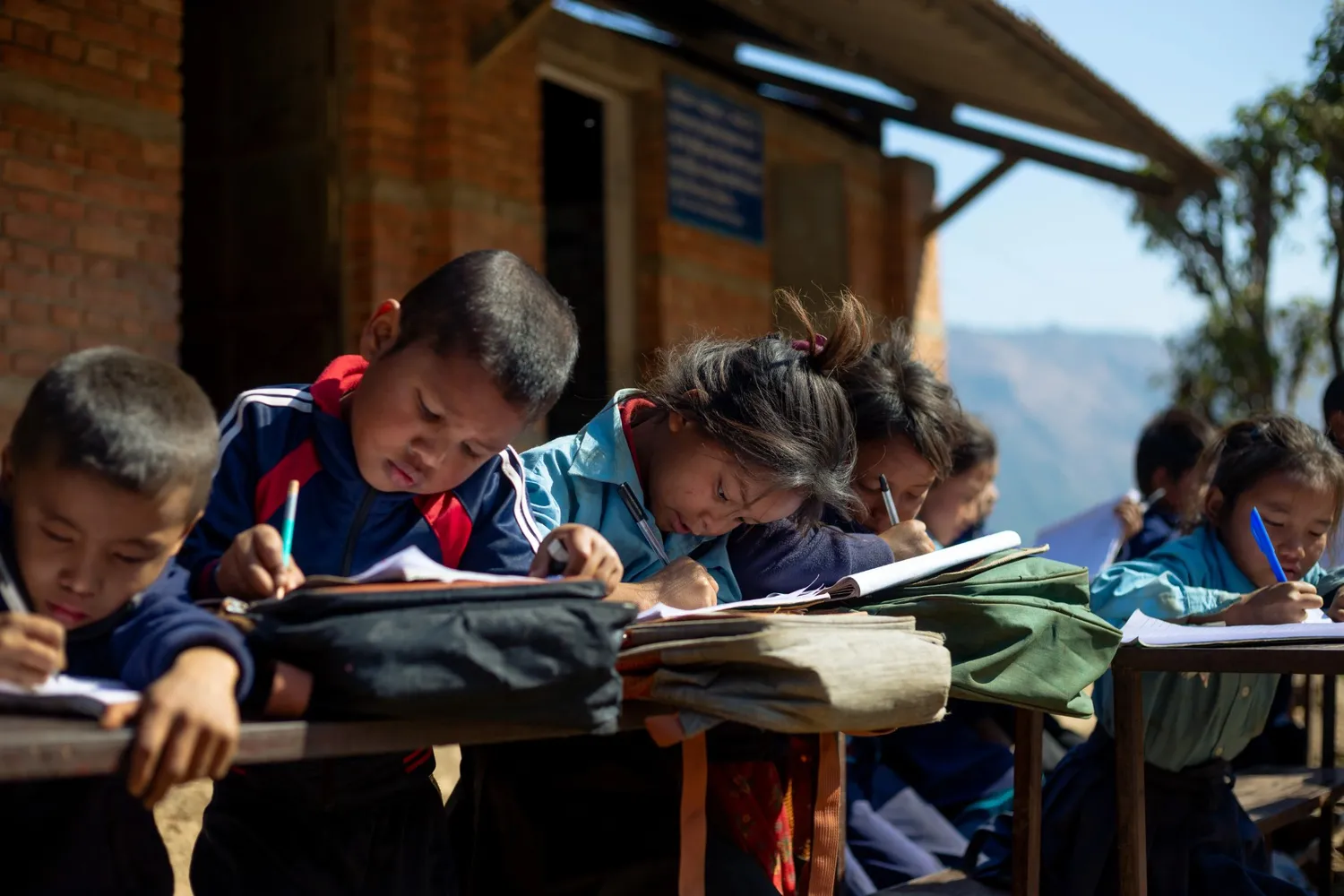
As winter sets in on the hills, valleys, and plains of Nepal, the air has become colder, and the mornings mistier. We can see the streets look softer, and the children heading on to their schools with their little caps on, giggling over their foggy breaths. Young and elderly people alike find relief in this cold by huddling up in front of a bonfire, sipping on their hot cup of tea in their hands. Evening comes a bit sooner every day and then almost quietly, an inviting glow in shades of red and gold begins to spill out of the store windows and malls, and strings of fairy lights paint a mosaic of joy across the landscape. For many Nepalis, it mirrors the spirit of our beloved festival of lights; Tihar, where homes glow with diyos (oil lamps) and communities come together in celebration. Just as Tihar lights our way in autumn, Christmas has also started weaving its own unique thread on the beautiful tapestry of Nepalese culture. This invites a natural question: how did Christmas celebrations begin, and how do we celebrate it here in Nepal today?
Christmas, celebrated on December 25, originated as a religious event commemorating the birth of Jesus Christ, whom Christians regard as their savior. In light of what the Holy Bible says, an angel appeared to virgin Mary, a young woman, and announced that she would conceive a child through the Holy Spirit. Later, Mary and her husband Joseph traveled to Bethlehem because of a census but found no room that was available. Wanting to be sheltered, they lay in a simple stable, and that is where the birth of Jesus took place. It is also said that shepherds were guided by angelic messages to witness the birth of Jesus, and a star guided three wise men from the East bearing gifts of gold, frankincense, and myrrh.
The birth of Jesus is viewed by believers as a divine happening, a sign of God’s love towards humanity, and a pledge for salvation. Christmas, in its earliest days, was celebrated with simplicity by the early followers, in the form of gatherings to celebrate the nativity. But over centuries, its message traveled far beyond its first-century origins and shaped these traditions across continents. Many customs associated with Christmas today, such as decorating trees with lights, can be traced back to ancient winter festivals celebrating light and life during the darkest days of the year.
Globally, Christmas is celebrated by different communities in different ways. In Europe and North America, winter markets, fireplaces, and cozy family gatherings are central to the season. In tropical regions, the celebrations spill out into the streets and open areas. But the message remains the same: one of hope, renewal, and community. Traditions surrounding the New Year can also be traced back thousands of years as the seasons change and provide a moment for us to reflect on our past, and look ahead with optimism.
Nepal, with its vibrant mix of cultures and faiths, reflects this spirit of coexistence. While Christianity has a relatively recent history in Nepal, its growth has been notable throughout the years. According to the 2021 census by Central Bureau of Statistics, Nepal, Christianity is now the fifth most practiced religion in the country, with 512,313 adherents, or 1.8 percent of the population, up from 1.4 percent in 2011. Reports from the Gordon Conwell Theological Seminary and the World Christian Database have identified the Nepali church as one of the fastest-growing Christian communities in the world. While Christians remain a minority, they live alongside Hindus, Buddhists, Muslims, and many others, contributing to Nepal’s deeply pluralistic society.
For several years, Christmas in Nepal was observed rather quietly, mostly within the confines of the Christian family and congregation. However, in recent times, social openness, the influence of tourism, media, technology, and globalization have brought the festival into wider public view, especially among younger generations. The influence of movies such as “Home Alone” and “Little Women” has greatly influenced our collective notion of how Christmas should look and feel. Office Secret Santa exchanges, festive decor, Christmas markets, concerts, music festivals, and gatherings among friends have become increasingly common. Also, Christmas Day has been included in Nepal’s list of national holidays, thereby solidifying its presence in the country’s shared calendar.
In our main project area of Kalikatar, Makwanpur, the harmony and beauty of coexistence are evident on a daily basis. While crossing the bridge to Manahari, one can see dozens of churches nestled into small side streets, standing alongside temples and homes. The percentage of the Christian population has shown substantial increase in this region, from 2.8% in 2011 to 6.12% in 2021, reflecting broader national trends.
Christmas within Nepali Christian families is still very community-oriented. Preparations begin well before Christmas day. About a week in advance, church members divide responsibilities, some focusing on decorations, others on cooking, logistics, and event arrangements. Churches serve as the heart of these celebrations. Caroling begins during this period, with groups moving from area to area singing and dancing together, much like <em>Deusi Bhailo </em>during Tihar, though carrying a distinct Christian meaning. Caroling activities come to an end a day before Christmas. Christmas Eve is dedicated to rest and final preparations. Throughout the week, families and elders cook together, share meals, and strengthen bonds through simple moments of fellowship.
On Christmas morning, families wake early, dress in new or the best clothes, and head to church. Christmas celebration begins with prayers, praise and worship, the reading of the Word of God, songs, dances, and cake cutting. Church leaders and various groups, such as mothers’ fellowships, fathers’ fellowships, and Sunday school teams, come together to make the event special, treating Christmas as a moment of thanksgiving. Laughter fills church courtyards, friends reconnect, gifts are exchanged, and the sense of warmth lingers well into the evening. Many families then return home to host Christmas dinner, inviting close friends from church and extending the celebration through shared meals and conversation.
Ultimately, beyond the lights, decorations, and presents, the real essence of Christmas and the New Year lies in kindness, generosity, and togetherness. These are the same values that guide our work at Shangri-La Development Organization throughout the year. This is a special time of year when we should look back at what the past year has offered us, take time to be thankful, and look towards the future with hope. This season shows us that even the smallest act of kindness can radiate like a beacon.
As this year draws to a close, we would like to take this opportunity to express our deepest gratitude to all of our supporters, partners, staff, and community members who continue to walk this journey with us. Your support bridges distances and cultures, making our work possible. To all of our readers, both near and far, we send warm festive wishes from everyone at Shangri-La Development Organization. May your holidays be filled with joy, light, and the promise of new beginnings.
And as we light up our homes this December, may we also commit to bringing warmth, compassion, and togetherness into the lives of those around us, carrying that light well beyond the festive season.