10 Years of Impact: A Decade of Community Development, Emergency Relief, and Humanitarian Support
July 14, 2026
One Time Support Projects
View AllYou will be redirected to our partner organization's page.
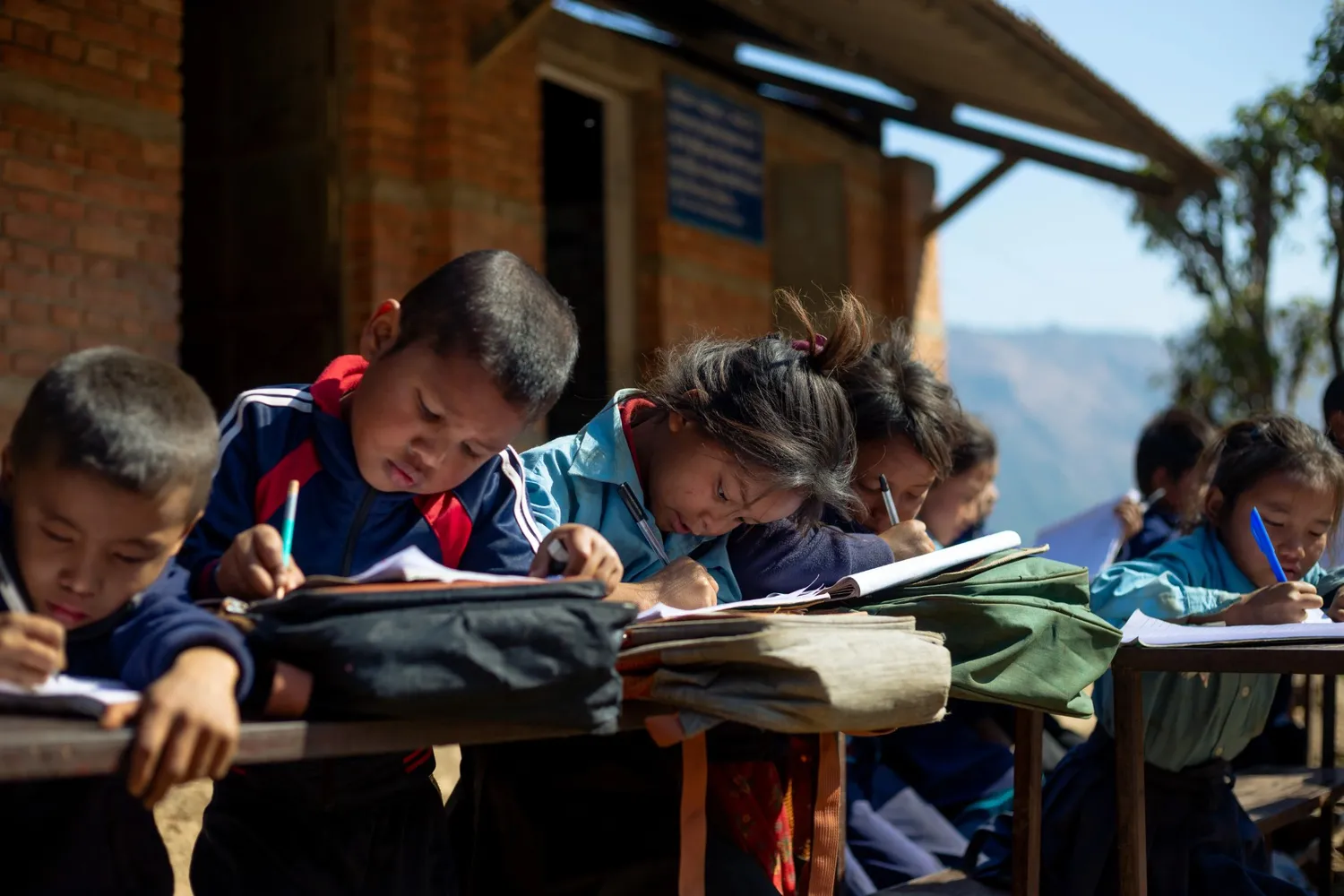
A majority of people in Nepal continue to use firewood to cook their food today. The 2023 national census report from the Nepal Central Bureau of Statistics reveals that 51% of Nepalis continue to rely on firewood — a total of 6.66 million households. Attached to this habit, which continues to persist due to underdevelopment in rural Nepal, are a series of health issues that disproportionately affect women and children.
Research conducted in Nepal itself has demonstrated a strong correlation between the use of firewood and respiratory illnesses like acute lower respiratory infection (ALRI). Despite a wave of urbanization in recent years, making the switch to modern LPG gas stoves still poses significant challenges in especially remote locations. Barriers include the initial cost to make the switch, which can be too high a cost to humble village folk, and geographical challenges in the hilly areas of Nepal can make it difficult to easily transport LPG gas cylinders to homes.
This issue became an area of concern for Shangri-La Development Association’s Health Project, which seeks to help vulnerable populations including women and children, and is attuned to emerging health issues specific to its project regions. This approach has, in the past, led to annual malnutrition screening and awareness camps that were conducted to mitigate the rampant issue of childhood malnutrition in our project region of Kailash Rural Municipality, Makwanpur.
The prevalence of traditional wood stoves in Kailash posed a similarly ingrained health issue across the rural municipality. The municipality is situated in Makwanpur district, where a good portion of Nepal’s Chepang community is situated. The Chepang people are among the most marginalized and excluded groups in Nepal, coming from a nomadic history where they mostly lived off the land. This history isn’t too far behind for the Chepang people; today, the Chepang people struggle to adjust to the modern, settled lifestyle. This is seen in subtle ways through behaviors that are informed by outdated beliefs and a suspicion of modern systems. This ingrained, traditional way of living has a strong influence on the health behaviors of Chepang people, for example in their natural suspicion of modern health services, something commonly seen among the older Chepang folk. This also translates to a resistance in moving away from traditional cooking methods, even when they are shown the health risks posed by traditional indoor wood stoves.
At the same time, many Chepang families are known to live hand-to-mouth, relying on sustenance farming and the occasional labor work in order to make a living. This creates a precarious financial situation that leaves them unable to transition to modern cooking methods even if they so desire.
The smokeless stoves introduced by SDA in Kailash Rural Municipality was a result of all these considerations. An invention designed for the typically rural lifestyle, these stoves are also wood-fired, but are far more effective and completely negate the typical health risks associated with traditional wood stoves. Designed by the Center for Rural Technology, these stoves employ a simple yet effective design to better manage the excess smoke that is produced by the timber-fueled fire. In addition, they also add some nifty but highly functional benefits too.
A chimney allows the excess smoke to be safely expelled outside, where they won’t affect the houseowners and their children. At the same time, these smokeless stoves are much more effective at fuel consumption compared to traditional wood stoves, reducing the need for lumber. Where traditional wood ovens allowed only one utensil to be heated, the smokeless stoves offer better heat management and include slots to heat multiple utensils at the same time, improving fuel efficiency in two different ways. Additionally, there is a box attached to the heating compartment where water can be boiled simultaneously while cooking. Finally, during the winters, the smokeless stoves can be configured to radiate heat throughout the house, providing warm and safe living conditions for infants, while also creating more comfortable living conditions for other family members too.
SDA’s work with distributing smokeless stoves didn’t start today; it began back in 2017, when the organization was deeply involved in post-earthquake reconstruction efforts. The Shangri-La Reconstruction and Development Project (SRDP) was a collaborative reconstruction project involving many organizations, under which SDA took the charge of rebuilding earthquake-damaged homes in its own project area of Kailash Rural Municipality. Over the course of about a year, we succeeded in building 34 homes, providing safe, earthquake-resistant housing for a total of 245 individuals.
The design process for the houses was informed by the rural context of the project area, and we employed various rural-oriented technologies such as the use of economical, high-strength bricks known as Compressed Stabilized Earth Bricks (CSEB), Ecosan toilets, and smokeless stoves in each of the reconstructed houses. Providing smokeless stoves alongside earthquake-resistant housing was a synergistic benefit that we could offer to the community members at that point in time. Some years later, through a One-Time Special Project (OTSP) designed to supplement our regular project activities, SDA conducted a second round of distributions, installing 24 smokeless stoves in new homes of our project area.
And in 2025, SDA has conducted a third round of distributions, its most ambitious one yet — 100 smokeless stoves installed across Kailash Rural Municipality. Conducted as a part of yet another OTSP, there were various steps involved in the distribution, where each step sought to ensure maximum benefit to community members as well as long-term feasibility.
The process began with the development of an elaborate selection criteria which included factors such as household income, time spent collecting firewood, household size, presence of family members with lung disease, and so on. A total of 243 households were screened according to this criteria, and families who stood to benefit the most from the smokeless selection criteria were selected — 100 of them.
This time around, we also prepared five local resource persons from the project area itself to act as repair technicians for the smokeless stoves, to ensure their long-term use and viability. Representatives from the Center for Rural Technology, who were intimately familiar with the smokeless stove technology, its background, and usage, were invited to conduct a workshop for five local resource persons. Through this workshop, the local resource persons were able to understand how the smokeless stoves worked, and how to conduct necessary repairs when the time came. Not just that, but they were also able to understand the broader context against which these stoves benefitted the community, from the health benefits to the ecological ones. They understood that, by improving the efficiency of the wood fire, smokeless stoves would drastically reduce the amount of timber needed by a family throughout the year. Learning about this would also allow them to explain these benefits to community members later on. And, some years down the line, they would be readily available to make necessary repairs on the smokeless stoves.
Following this workshop, a formal distribution program was conducted at the SDA Literacy Home in Kalikatar, where the parts for the smokeless stoves were distributed to the selected families in the presence of the Chairperson of Kailash Rural Municipality and other local-level representatives. The homeowners were given responsibility to transport the parts to their homes, and in the weeks following that, the five resource persons trained by CRT visited all of these localities and installed the stoves in the beneficiaries’ homes.
The response to these smokeless stoves was fantastic, and at times endearing. We noted some families were so eager to get started with the smokeless stoves that they began cooking their meals immediately after the installations were done; at other homes, we were able to capture tender scenes where the mother sat by while a son or daughter took over cooking duties, safe in the knowledge that they were safe from the smoke, and that they would have to spend less time gathering firewood.