SDA Nepal

10 Years of Impact: A Decade of Community Development, Emergency Relief, and Humanitarian Support

On April 26, 2025, Shangri-La Development Association marked a significant milestone in its history — our 10th Anniversary program, titled, 10 Years of Impact: A Decade of Community Development, Emergency Relief, and Humanitarian Support, with. The program was more than just a celebration — it was a reflection on the work we have accomplished, the obstacles we faced along the way, as well as the positive change and impact we have managed to bring in the community. The event was attended by community stakeholders, partner organizations, government representatives, as well as representatives from various organizations that we have worked with in the past to bring our projects to fruition.

Shangri-La Development Association was established in November, 2015 by a group of youngsters, eager to give back to the community, and to create a positive impact in the country. Supported by partner organizations, Shangri-La Association in Switzerland and Govinda Association in Germany, we sought out those underrepresented communities and regions of Nepal that were in drastic need of support. With thorough research and two rounds of field surveys, we decided to base our projects in Kailash Rural Municipality, a highly remote, Chepang-majority community situated in Makwanpur district, where road access would be routinely cut off during the monsoon season. Soon after establishment, we also took over the Jumla Special Children Project, which provided inclusive education opportunities to deaf children in the remote, Himalayan region of Jumla.

Guided by visionary mentors like Achim Mettang and Rocco Umbescheidt, we established a multi-sectoral umbrella project that we titled the Shangri-La Sustainable Local Initiative (SSLI). Under this project, we would run activities in health, education, and agriculture sectors, with a single united goal of uplifting the living standards and capabilities of our beneficiaries.

In the 10 years since that time, SDA has become a household name in its project region due to the positive impact it has made in the community, known by all for the work we do to empower farmers, mothers, health workers, and students. Our 10th Anniversary event was a look back at it all — at the same time, it was also a turning point in our journey, not just in the milestone we had reached, but also in our journey ahead, adapting with the changing times.

Our efforts to highlight this journey was encapsulated in a format that went beyond just a formal program. Capturing the most significant moments from this 10-year journey, a series of canvases were put on display for visitors. The Memory Lane, as we called it, began with a decades-old photograph from Shangri-La Orphanage Home, where our founding members had grown up together. The group photo captured our founders in their teen years, at a time when Shangri-La Development Association was yet to be conceived of as an idea.

Another canvas showed a photograph of our founding Executive Committee members from the day SDA was formally chartered; another was a bird’s eye view of a greenery-filled Kalikatar Bazaar, captured in 2015, where we would later go on to build our Makwanpur field office. An image of a classroom filled with middle-aged people with their hands raised showed the moment in which we gained the trust of the Kailash natives to carry out the house reconstruction project following the devastating Nepal earthquake of 2015. Named the Shangri-La Reconstruction and Development Project (SRDP), it was an expansive house reconstruction project that spanned multiple districts, undertaken as a collaborative effort of a group of NGOs. Under SRDP, we would build 34 houses in Kailash Rural Municipality, providing housing for a total of 245 individuals.

In this way, the Memory Lane showcased significant moments in our journey including milestone moments in our various projects, ending up with a collage of some of our latest moments: a recent Annual General Meeting, and some significant departures from our team.

Following the Memory Lane were a series of stalls where attendees could symbolically interact with some of our projects: a tree stall featured displays of tree saplings that were grown at our own tree nursery at Achim’s Agriculture Field, the model organic farm that we operate at Kailash, feeding nearly 500 school students and 15 hostel girls in the process. Another stall featured reusable, environmentally-friendly sanitary pads that have become a lifeline for women in Kailash Rural Municipality. In a region where people are still resistant to receiving modern health and reproductive education, and the average financial status of a family keeps the women from opting for the standard choices in menstrual health, the reusable sanitary pads that we have introduced in the community have become a symbol of empowerment. These sanitary pads can be easily made at home and keeping them sanitized is also a convenient affair, leading to its adoption by many women in Kailash Rural Municipality.

Another stall displayed carpentry items brought over from Shangri-La Orphanage Home, built by its current students as part of a life skills training program named the Shangri-La Vocational Training Center. Even more materials to read and explore SDA’s impact were shared digitally through QR codes, as a humble attempt to promote climate-aware action and reduce the use of paper.

The formal session was opened by our Board Secretary, Dashrath Ghimire, who reflected upon the day as a symbol of SDA’s decade-long journey of “dedication, unity, and service.” In heartfelt tones, he shared a sense of pride upon succeeding in the organization’s vision of bringing prosperity and development to the community. He ended his opening address with a note of gratitude towards all the attendees and the supporters and well-wishers who had contributed to SDA’s success, from its earliest days to the present.

Chairperson of Kailash Rural Municipality, Lok Bahadur Moktan, then signalled the start of the formal program by lighting the ceremonial lamp — a Nepali tradition that precedes formal events.

The most significant moments in the formal program was when community members from our project regions — individuals who had directly benefited from our programs, and seen our work first-hand in their communities — took to the stage to share their own stories. The first of these speakers was Ram Maya Rijal, an active Female Community Health Volunteer who serves under Katunje Health Post in Kalikatar, at the heart of Kailash Rural Municipality. FCHVs are instrumental in the rural health sector of Nepal, and are responsible for connecting community members to the local health services, and as such are deeply in tune with the issues in their area’s health sector. Rijal shared her experience traversing the hills of Kailash in the course of her duties, remarking how “SDA has walked hand-in-hand with us and taught us a lot about how to do our work.”

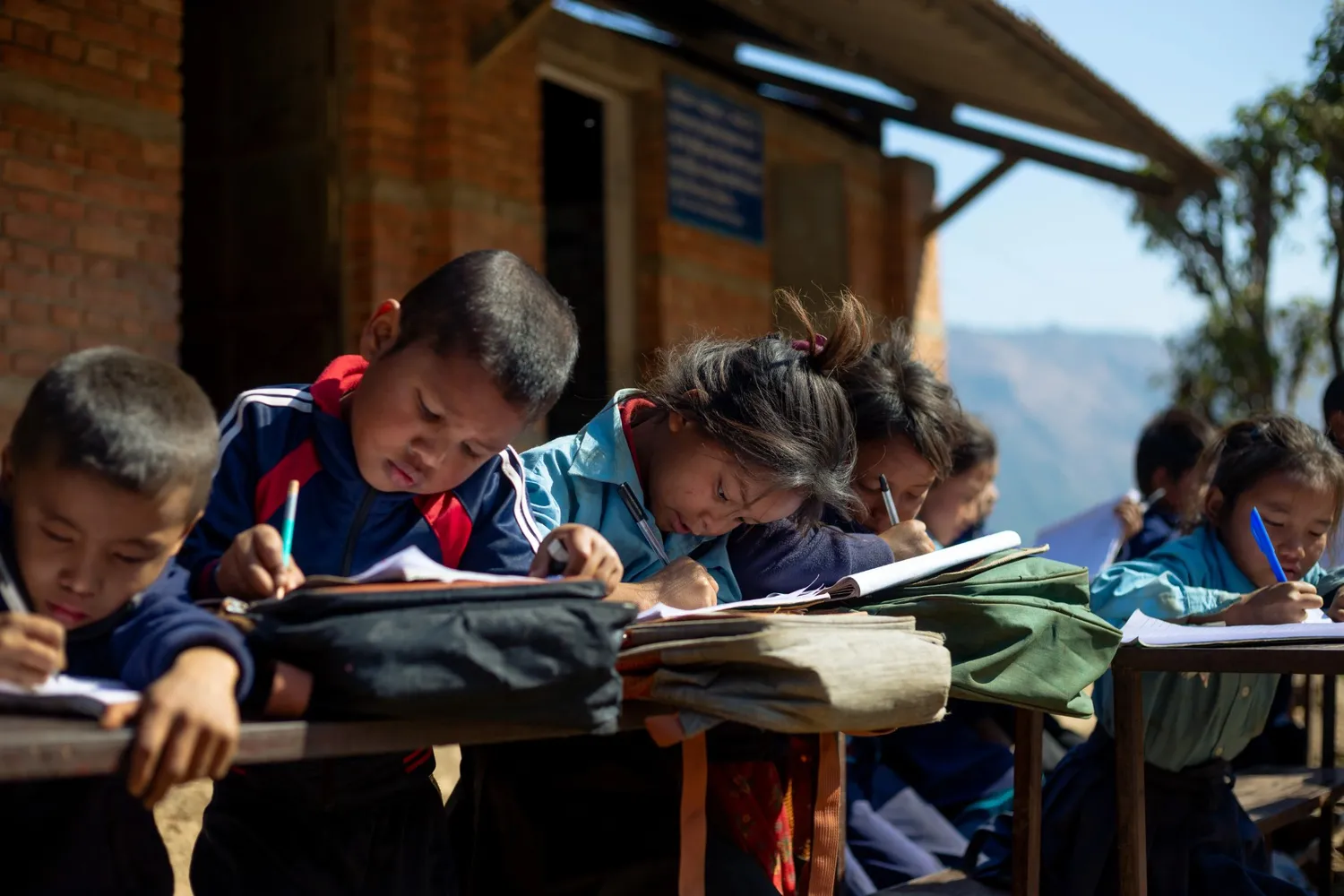
The next speaker was 16-year-old Chameli Maya Chepang, one of the girls from the SDA Literacy Home who has recently completed her SEE examinations. The Hostel Project, which is housed in the Literacy Home, serves to directly support school-aged girls who have dropped out of school with housing and schooling, and provides them with all the resources they need to complete school. She related to the audience the story of her family, and how she ended up at the Literacy Home. Chameli Maya’s family had been able to send her to school till Class 5, in the nearby Deutish Primary School — one of the community schools that receive complete support for uniforms, stationeries, and mid-day meals from SDA. However, the school only offered classes till Class 5, and moving forward with her schooling meant walking for hours as a child to the nearest available secondary school. She was forced to quit schooling; her parents couldn’t afford the time to escort her to and from school, nor could they afford to rent a room near the secondary school itself.

At this juncture, it was the opportunity to join the SDA Hostel Project, and live at the Literacy Home, that allowed her to continue with her education. With our support, she was enrolled in Bhawani Secondary School, situated near the Literacy Home. “There are 15 of us at the hostel,” she shared, “with the facilities provided by SDA, we’ve been moving forward in our education steadily. Since I joined the hostel, my studies have been improving every year, until I earned the first rank in my class in the class exams of Grade 10.”

The next speaker was one of our former students from the Jumla Special Children Project. Durga Laxmi Rokaya had come to be a part of JSCP in 2016, the same year that the project was grandfathered into SDA. Like all the other students of JSCP, she was completely deaf, born in the mountainous region of Jumla. With the right support from SDA, today she is studying for her bachelor’s degree in Kathmandu. She related the story of how the project became instrumental in helping her gain the right opportunities in life. “SDA supported me from the year 2016 to 2021, in the course of which I was eventually able to study B.Ed,” she shared, “we used to study in inclusive classes alongside with students who could hear. The organization provided us with sign language teachers, allowing us to gain an education. Shangri-La Development Association has supported me greatly in helping me reach the place I am at today.”

A special moment from the formal program was when Roberto Presa, CFO and former Chairperson of Shangri-La Association, Switzerland, presented SDA with a special gift to commemorate the occasion — a traditional cowbell from Switzerland, on behalf of Shangri-La Association, Switzerland, and Govinda Association, Germany. The loud, sonorous ring of the bell was the “sound of your impact”, he declared, a gift “to remember this very occasion of the first decade, of the impact you’ve generated and the sounds you have brought out to Nepal. We’re thanking you for all the dedication and all the support. And we’re honored to be able to walk along your side throughout this fantastic journey and we hope that it will continue and that it will generate lots of more impact.”

Department Chief of Social Welfare Council, Dipendra Pant, reminisced during the event about his own experiences with Shangri-La Development Association. In the early years of the organization, he had been to our project location in Kalikatar as part of an SWC monitoring visit, during which he could observe our work firsthand. He related his experiences observing our work in different sectors, such as Achim’s Agriculture Field as a model organic farm under the Agriculture Project, as well as the Hostel Project, and reflected that the foundations upon which these activities were conducted were noteworthy and forward-thinking.

“As per my experience, I would like to express that there has been a genuine impact,” he stated, “the visuals and video that are shared act as a testament. Along with that, we have listened today from the actual beneficiaries about their thoughts and feelings.” He also commended the organization for supporting Nepal government’s development plans by working with marginalized communities in remote areas.

Chairperson of Kailash Rural Municipality, Lok Bahadur Moktan, pointed out the remote nature of the region and expressed gratitude for SDA for its multisectoral projects. “On behalf of Kailash Rural Municipality, I would like to thank Shangri-La Development Association for the incomparable work it has done to improve the reach of education the children belonging to marginalized and impoverished communities, to improve the reach of health services, to invest in the agriculture sector, and to preserve the environmental integrity of this region.”

The event was also a unique occasion to commemorate all the individuals and organizations who played instrumental roles in the success of SDA’s developmental work. As an organization that has worked closely with the community, our team is full of long-serving members who have been with us for five years or more. The Anniversary was a special occasion in which to recognize their contributions.

Similarly, we offered tokens of love for the various organizations and individuals who had an especially meaningful role in our journey. Of special significance was the token dedicated to Rocco Umbescheidt and the posthumous token given to Achim Mettang, the two primary mentor figures who guided us in our early days.In between, the girls from the SDA Literacy Home and two of the JSCP students also delivered dance performances which were well received by the audience members. A 20-minute video capturing the heartfelt stories of community members in SDA’s project area was also a highlight that showcased how the organization had succeeded in improving lives.

The formal program was finally closed by SDA’s former Chairperson of eight years, Jay Shankar Upadhyay. Currently serving as Advisor to the organization, he closed the program by individually thanking all those organizations and individuals whose contributions have been invaluable to SDA’s journey — the mentors, Achyut Uncle and Dikendra Uncle, were key mentions. He also expressed a heartfelt thanks to Shangri-La Orphanage Home, stating “this is only the blooming of the flower that you watered and took care of for 20 years.”

He also took a moment to explain the deep significance behind SDA’s logo, which encapsulated the history of its founders and the idea which led to the organization’s birth. “If you look at our organization’s logo, you will find three individuals walking up steps on Nepal’s map, while holding hands,” he explained, “we started this organization because we felt that it isn’t just enough that we have become capable. We wanted the country as a whole to become capable, and started this organization to take forward that mission.”

Following the closing speech, an hour-long musical session followed. Led by the instrumental world fusion band, Ashish Maharjan and The Triplets, the musical session was the space for all the participants to revel in old relationships, and the joy of togetherness. Upon familiar folk tunes, attendees soon filled the space with joyous dance, and it truly became a moment to remember for years into the future.

Today, our success in the developmental and humanitarian work that we do belies our humble beginnings: where a group of youngsters, newly entering into adult life, decided to create a vehicle for social development, dedicated for the most underprivileged and impoverished communities of Nepal.

Child-Friendly School Taps: A Small Intervention with Big Impact

Imagine you are a child in Kailash Rural Municipality.

Your day begins early, often before the sun has fully risen. You walk long distances to school along narrow forest trails and uneven paths that wind through hills and scattered settlements. Some mornings are cold, some are wet, and some are unbearably hot. By the time you reach school, you are already tired. The classroom awaits you, but so does thirst. There is a tap somewhere on the school premises, but the water supply is irregular. Sometimes the water is muddy, and sometimes it does not flow at all. Washing your hands before eating or after using the toilet is not always possible. In small moments like these, learning becomes secondary to survival.

In Nepal, water scarcity, or rather, unequal access to safe water is not a new story. In cities like Kathmandu, families have stood in long queues for water for decades, relying on tankers and private suppliers. Water has shaped daily life across generations. In districts outside the Capital Valley, especially in rural and historically marginalized communities, the struggle looks different. In places like Kailash Rural Municipality, the problem is not always the absolute scarcity of water. Rather, it is the lack of technology, infrastructure, and knowledge to ensure that water is safe, accessible, and appropriate for use and consumption.

Water is a foundation for health and dignity. It is fundamental to life, but for children, it is also deeply tied to dignity, health, emotional well-being, and learning. When safe drinking water is unavailable, children are more vulnerable to waterborne diseases such as diarrhoea, typhoid, and jaundice, which weaken the body and often lead to repeated absences from school. Over time, this affects academic performance and increases the risk of dropping out altogether. The impacts are not only physical. Constant illness, fatigue, and discomfort take a mental and emotional toll on children. The stress of unmet basic needs quietly undermines confidence and concentration. For girls, the absence of adequate water and sanitation facilities is particularly challenging. It affects menstrual hygiene management, participation in school activities, and sometimes the decision to continue attending school at all.

Globally, these challenges are recognized under Sustainable Development Goal 6, which calls for ensuring the availability and sustainable management of water and sanitation for all. Despite steady progress, billions of people worldwide still lack safely managed drinking water and sanitation services. Nepal’s situation reflects this global reality. While national figures suggest that a large proportion of households have access to basic drinking water sources, access to clean and safely managed drinking water remains limited. According to national surveys, in rural areas of Bagmati Province, where Kailash Rural Municipality is located, only a small percentage of households use safely managed drinking water. Most households rely on water sources contaminated with E. coli, and only a fraction treat water before drinking. These statistics are not abstract; they appear in classrooms where children fall sick, miss lessons, and struggle to keep up.

When we talk about quality education, we often focus on textbooks, curricula, teacher-student ratios, classroom infrastructure, or digital learning tools. While these are important, education cannot be understood in isolation from the conditions in which children live and learn. A child’s ability to learn is inseparable from their health and well-being. One often-overlooked indicator of a quality learning environment is access to clean and safe drinking water. Without it, even the best curriculum falls short. A child-friendly school is more than a physical space; it is participatory, inclusive, protective, and responsive to the needs of all children—girls and boys alike. It supports nutrition, health, and emotional safety. It connects classrooms with families and the wider community. Most importantly, it nurtures children as confident, happy, creative, and empowered individuals. Child-friendly schools are schools for life, and water lies at the heart of them. Without access to safe and adequate water, even the most well-intentioned school cannot fully meet these ideals.

Nepal’s legal and policy frameworks recognize the importance of water in human development. The Constitution of Nepal, under Article 35, guarantees every citizen the right to access clean drinking water and sanitation, recognizing it as fundamental to health. Article 30 further affirms the right to live in a clean and healthy environment. At the policy level, the Sixteenth National Plan emphasizes improving physical and social infrastructure, including drinking water and sanitation facilities in educational institutions. Yet despite these commitments, implementation remains uneven, particularly in remote and marginalized communities where institutional neglect has persisted for generations.

Recognizing these gaps, Shangri-La Development Association (SDA) has worked since 2014 to support marginalized communities through its flagship programme, the Shangri-La Sustainable Local Initiative (SSLI). Implemented continuously over multiple phases, SSLI has evolved through learning and close engagement with communities, particularly Chepang communities in Makwanpur District. Now in its fifth phase, SSLI-5 adopts an integrated approach across education, health, WASH, livelihoods, and community empowerment. Previous phases have demonstrated tangible results, including reduced dropout rates, improved toilet coverage, and better child health outcomes.

SDA currently supports community schools in Kailash Rural Municipality, which run mid-day meal programmes that provide balanced nutrition using locally grown vegetables, fruits, and grains. However, the lack of proper school taps has limited the effectiveness of school health screening and WASH awareness programmes. While children are taught about handwashing and sanitation, the absence of functional taps makes it difficult to translate knowledge into daily practice

To address this critical gap, Shangri-La Development Association (SDA) is implementing the construction of child-friendly school taps in selected schools of Kailash Rural Municipality. These taps are designed to be age-appropriate, easy for children to use, and suitable for the local context. Where required, water purification systems are installed to ensure compliance with national drinking water quality standards. The taps are strategically located within school premises, particularly near toilet facilities, to encourage regular handwashing and improve hygiene practices among students. Beyond physical infrastructure, the intervention includes hygiene and sanitation awareness programmes, along with training for school staff and community members on the proper operation and maintenance of the water systems. Regular water quality testing is conducted to ensure safety, and schools are supported in developing sustainability and maintenance plans to ensure long-term impact.

This initiative is implemented in close coordination with School Management Committees and local governments. Local engineers are involved in the survey, design, and estimation processes, while community members actively participate in construction and monitoring. Parents contributed by transporting sand, stones, cement, and other materials, their hands shaping not just the taps, but the foundation of a healthier school environment. This participatory approach strengthens local ownership, builds technical capacity, and increases the likelihood that the facilities will be maintained even after project completion. At present, the construction of child-friendly taps has been successfully completed at Shree Praja Utthan School, Shree Nandikeshore School, and Shree Satyadevi School and is ongoing in two other schools.

The impact of these interventions is already visible at the school and community levels. Kalpana Praja, Principal of Shree Praja Utthan Primary School, Kailash-04, Dhusrang, shared that although the school previously had a water tap, it was not child-friendly. Since the installation of the child-friendly tap, students can now use water easily on their own. This small change has led to significant improvements in daily hygiene practices and overall cleanliness in the school. On behalf of the entire school community, she expressed sincere gratitude to SDA for supporting them with this much-needed facility.

Students have also felt the difference. Miron Praja, a Class 2 student from the same school, shared, “We have a new tap in our school, and it is very easy to use. Me and my friends now remind each other to wash hands.” Parents have similarly expressed relief and appreciation. Inimaya Praja, a parent from Kailash-04, shared, “I feel relieved knowing that my child has access to safe water at school. I am very grateful for this support, as it directly contributes to the well-being of our children.”

While the project is grounded in local realities, it also aligns with broader national and global commitments. It contributes directly to Sustainable Development Goal 6 on clean water and sanitation and supports Sustainable Development Goal 4 on quality education by creating healthier and more conducive learning environments. It also reflects the priorities of Nepal’s Sixteenth National Plan, which emphasizes improving educational infrastructure, including access to clean drinking water and sanitation in schools.

For a child in Kailash, a tap is not just a tap. It is the ability to drink water without fear of falling sick. It is clean hands before a meal. It is dignity, health, and the freedom to focus on learning. The intervention may appear small, but its ripple effects are wide—improving health outcomes, reinforcing hygiene practices, supporting nutrition programmes, and ultimately enhancing educational attainment. By investing in child-friendly school taps, Shangri-La Development Association is strengthening the foundations of child-friendly schools. Schools where water flows, hands are washed, meals are prepared safely, and learning can truly take root.

Christmas and New Beginnings: A Season of Light, Reflection, and Togetherness

As winter sets in on the hills, valleys, and plains of Nepal, the air has become colder, and the mornings mistier. We can see the streets look softer, and the children heading on to their schools with their little caps on, giggling over their foggy breaths. Young and elderly people alike find relief in this cold by huddling up in front of a bonfire, sipping on their hot cup of tea in their hands. Evening comes a bit sooner every day and then almost quietly, an inviting glow in shades of red and gold begins to spill out of the store windows and malls, and strings of fairy lights paint a mosaic of joy across the landscape. For many Nepalis, it mirrors the spirit of our beloved festival of lights; Tihar, where homes glow with diyos (oil lamps) and communities come together in celebration. Just as Tihar lights our way in autumn, Christmas has also started weaving its own unique thread on the beautiful tapestry of Nepalese culture. This invites a natural question: how did Christmas celebrations begin, and how do we celebrate it here in Nepal today?

The Origins of Christmas

Christmas, celebrated on December 25, originated as a religious event commemorating the birth of Jesus Christ, whom Christians regard as their savior. In light of what the Holy Bible says, an angel appeared to virgin Mary, a young woman, and announced that she would conceive a child through the Holy Spirit. Later, Mary and her husband Joseph traveled to Bethlehem because of a census but found no room that was available. Wanting to be sheltered, they lay in a simple stable, and that is where the birth of Jesus took place. It is also said that shepherds were guided by angelic messages to witness the birth of Jesus, and a star guided three wise men from the East bearing gifts of gold, frankincense, and myrrh.

The birth of Jesus is viewed by believers as a divine happening, a sign of God’s love towards humanity, and a pledge for salvation. Christmas, in its earliest days, was celebrated with simplicity by the early followers, in the form of gatherings to celebrate the nativity. But over centuries, its message traveled far beyond its first-century origins and shaped these traditions across continents. Many customs associated with Christmas today, such as decorating trees with lights, can be traced back to ancient winter festivals celebrating light and life during the darkest days of the year.

Globally, Christmas is celebrated by different communities in different ways. In Europe and North America, winter markets, fireplaces, and cozy family gatherings are central to the season. In tropical regions, the celebrations spill out into the streets and open areas. But the message remains the same: one of hope, renewal, and community. Traditions surrounding the New Year can also be traced back thousands of years as the seasons change and provide a moment for us to reflect on our past, and look ahead with optimism.

Christmas in Nepal Through the Years

Nepal, with its vibrant mix of cultures and faiths, reflects this spirit of coexistence. While Christianity has a relatively recent history in Nepal, its growth has been notable throughout the years. According to the 2021 census by Central Bureau of Statistics, Nepal, Christianity is now the fifth most practiced religion in the country, with 512,313 adherents, or 1.8 percent of the population, up from 1.4 percent in 2011. Reports from the Gordon Conwell Theological Seminary and the World Christian Database have identified the Nepali church as one of the fastest-growing Christian communities in the world. While Christians remain a minority, they live alongside Hindus, Buddhists, Muslims, and many others, contributing to Nepal’s deeply pluralistic society.

For several years, Christmas in Nepal was observed rather quietly, mostly within the confines of the Christian family and congregation. However, in recent times, social openness, the influence of tourism, media, technology, and globalization have brought the festival into wider public view, especially among younger generations. The influence of movies such as “Home Alone” and “Little Women” has greatly influenced our collective notion of how Christmas should look and feel. Office Secret Santa exchanges, festive decor, Christmas markets, concerts, music festivals, and gatherings among friends have become increasingly common. Also, Christmas Day has been included in Nepal’s list of national holidays, thereby solidifying its presence in the country’s shared calendar.

In our main project area of Kalikatar, Makwanpur, the harmony and beauty of coexistence are evident on a daily basis. While crossing the bridge to Manahari, one can see dozens of churches nestled into small side streets, standing alongside temples and homes. The percentage of the Christian population has shown substantial increase in this region, from 2.8% in 2011 to 6.12% in 2021, reflecting broader national trends.

The Christmas Week and the Joy of Preparation

Christmas within Nepali Christian families is still very community-oriented. Preparations begin well before Christmas day. About a week in advance, church members divide responsibilities, some focusing on decorations, others on cooking, logistics, and event arrangements. Churches serve as the heart of these celebrations. Caroling begins during this period, with groups moving from area to area singing and dancing together, much like <em>Deusi Bhailo </em>during Tihar, though carrying a distinct Christian meaning. Caroling activities come to an end a day before Christmas. Christmas Eve is dedicated to rest and final preparations. Throughout the week, families and elders cook together, share meals, and strengthen bonds through simple moments of fellowship.

On Christmas morning, families wake early, dress in new or the best clothes, and head to church. Christmas celebration begins with prayers, praise and worship, the reading of the Word of God, songs, dances, and cake cutting. Church leaders and various groups, such as mothers’ fellowships, fathers’ fellowships, and Sunday school teams, come together to make the event special, treating Christmas as a moment of thanksgiving. Laughter fills church courtyards, friends reconnect, gifts are exchanged, and the sense of warmth lingers well into the evening. Many families then return home to host Christmas dinner, inviting close friends from church and extending the celebration through shared meals and conversation.

Carrying the Light Forward

Ultimately, beyond the lights, decorations, and presents, the real essence of&nbsp; Christmas and the New Year lies in kindness, generosity, and togetherness. These are the same values that guide our work at Shangri-La Development Organization throughout the year. This is a special time of year when we should look back at what the past year has offered us, take time to be thankful, and look towards the future with hope. This season shows us that even the smallest act of kindness can radiate like a beacon.

As this year draws to a close, we would like to take this opportunity to express our deepest gratitude to all of our supporters, partners, staff, and community members who continue to walk this journey with us. Your support bridges distances and cultures, making our work possible. To all of our readers, both near and far, we send warm festive wishes from everyone at Shangri-La Development Organization. May your holidays be filled with joy, light, and the promise of new beginnings.

And as we light up our homes this December, may we also commit to bringing warmth, compassion, and togetherness into the lives of those around us, carrying that light well beyond the festive season.

Smokeless Stoves in Kailash: A Rural Solution to an Ages-Old Problem

A majority of people in Nepal continue to use firewood to cook their food today. The 2023 national census report from the Nepal Central Bureau of Statistics reveals that 51% of Nepalis continue to rely on firewood — a total of 6.66 million households. Attached to this habit, which continues to persist due to underdevelopment in rural Nepal, are a series of health issues that disproportionately affect women and children.

Research conducted in Nepal itself has demonstrated a strong correlation between the use of firewood and respiratory illnesses like acute lower respiratory infection (ALRI). Despite a wave of urbanization in recent years, making the switch to modern LPG gas stoves still poses significant challenges in especially remote locations. Barriers include the initial cost to make the switch, which can be too high a cost to humble village folk, and geographical challenges in the hilly areas of Nepal can make it difficult to easily transport LPG gas cylinders to homes.

This issue became an area of concern for Shangri-La Development Association’s Health Project, which seeks to help vulnerable populations including women and children, and is attuned to emerging health issues specific to its project regions. This approach has, in the past, led to annual malnutrition screening and awareness camps that were conducted to mitigate the rampant issue of childhood malnutrition in our project region of Kailash Rural Municipality, Makwanpur.

The prevalence of traditional wood stoves in Kailash posed a similarly ingrained health issue across the rural municipality. The municipality is situated in Makwanpur district, where a good portion of Nepal’s Chepang community is situated. The Chepang people are among the most marginalized and excluded groups in Nepal, coming from a nomadic history where they mostly lived off the land. This history isn’t too far behind for the Chepang people; today, the Chepang people struggle to adjust to the modern, settled lifestyle. This is seen in subtle ways through behaviors that are informed by outdated beliefs and a suspicion of modern systems. This ingrained, traditional way of living has a strong influence on the health behaviors of Chepang people, for example in their natural suspicion of modern health services, something commonly seen among the older Chepang folk. This also translates to a resistance in moving away from traditional cooking methods, even when they are shown the health risks posed by traditional indoor wood stoves.

At the same time, many Chepang families are known to live hand-to-mouth, relying on sustenance farming and the occasional labor work in order to make a living. This creates a precarious financial situation that leaves them unable to transition to modern cooking methods even if they so desire.

The smokeless stoves introduced by SDA in Kailash Rural Municipality was a result of all these considerations. An invention designed for the typically rural lifestyle, these stoves are also wood-fired, but are far more effective and completely negate the typical health risks associated with traditional wood stoves. Designed by the Center for Rural Technology, these stoves employ a simple yet effective design to better manage the excess smoke that is produced by the timber-fueled fire. In addition, they also add some nifty but highly functional benefits too.

A chimney allows the excess smoke to be safely expelled outside, where they won’t affect the houseowners and their children. At the same time, these smokeless stoves are much more effective at fuel consumption compared to traditional wood stoves, reducing the need for lumber. Where traditional wood ovens allowed only one utensil to be heated, the smokeless stoves offer better heat management and include slots to heat multiple utensils at the same time, improving fuel efficiency in two different ways. Additionally, there is a box attached to the heating compartment where water can be boiled simultaneously while cooking. Finally, during the winters, the smokeless stoves can be configured to radiate heat throughout the house, providing warm and safe living conditions for infants, while also creating more comfortable living conditions for other family members too.

SDA’s work with distributing smokeless stoves didn’t start today; it began back in 2017, when the organization was deeply involved in post-earthquake reconstruction efforts. The Shangri-La Reconstruction and Development Project (SRDP) was a collaborative reconstruction project involving many organizations, under which SDA took the charge of rebuilding earthquake-damaged homes in its own project area of Kailash Rural Municipality. Over the course of about a year, we succeeded in building 34 homes, providing safe, earthquake-resistant housing for a total of 245 individuals.

The design process for the houses was informed by the rural context of the project area, and we employed various rural-oriented technologies such as the use of economical, high-strength bricks known as Compressed Stabilized Earth Bricks (CSEB), Ecosan toilets, and smokeless stoves in each of the reconstructed houses. Providing smokeless stoves alongside earthquake-resistant housing was a synergistic benefit that we could offer to the community members at that point in time. Some years later, through a One-Time Special Project (OTSP) designed to supplement our regular project activities, SDA conducted a second round of distributions, installing 24 smokeless stoves in new homes of our project area.

And in 2025, SDA has conducted a third round of distributions, its most ambitious one yet — 100 smokeless stoves installed across Kailash Rural Municipality. Conducted as a part of yet another OTSP, there were various steps involved in the distribution, where each step sought to ensure maximum benefit to community members as well as long-term feasibility.

The process began with the development of an elaborate selection criteria which included factors such as household income, time spent collecting firewood, household size, presence of family members with lung disease, and so on. A total of 243 households were screened according to this criteria, and families who stood to benefit the most from the smokeless selection criteria were selected — 100 of them.

This time around, we also prepared five local resource persons from the project area itself to act as repair technicians for the smokeless stoves, to ensure their long-term use and viability. Representatives from the Center for Rural Technology, who were intimately familiar with the smokeless stove technology, its background, and usage, were invited to conduct a workshop for five local resource persons. Through this workshop, the local resource persons were able to understand how the smokeless stoves worked, and how to conduct necessary repairs when the time came. Not just that, but they were also able to understand the broader context against which these stoves benefitted the community, from the health benefits to the ecological ones. They understood that, by improving the efficiency of the wood fire, smokeless stoves would drastically reduce the amount of timber needed by a family throughout the year. Learning about this would also allow them to explain these benefits to community members later on. And, some years down the line, they would be readily available to make necessary repairs on the smokeless stoves.

Following this workshop, a formal distribution program was conducted at the SDA Literacy Home in Kalikatar, where the parts for the smokeless stoves were distributed to the selected families in the presence of the Chairperson of Kailash Rural Municipality and other local-level representatives. The homeowners were given responsibility to transport the parts to their homes, and in the weeks following that, the five resource persons trained by CRT visited all of these localities and installed the stoves in the beneficiaries’ homes.

The response to these smokeless stoves was fantastic, and at times endearing. We noted some families were so eager to get started with the smokeless stoves that they began cooking their meals immediately after the installations were done; at other homes, we were able to capture tender scenes where the mother sat by while a son or daughter took over cooking duties, safe in the knowledge that they were safe from the smoke, and that they would have to spend less time gathering firewood.

JSCP: Finding Hope for a Self-Reliant Life

Often referred to as the gateway to the Karnali region, Jumla stands as a symbol of resilience and a deep connection to Nepal’s rural heritage. The district is today renowned for its many picturesque trekking destinations. But life remains difficult for someone born and brought up in the region. Its remote location presents unique challenges, especially for people with disabilities who hail from that region. Jumla isn’t just remote in the physical sense; travel in and out of that area is quite difficult, which means that it is difficult for most people of the area to make an easy living. On top of that, it is often the case that parents there do not have the right education to understand the special care and environment that people with disabilities require for a healthy psychological growth.

The Jumla Special Children Project (JSCP), which was taken over by Shangri-La Development Association in the year 2015, works within this special intersection of disability and ruralism. Working in collaboration with the local government of Chandanath Rural Municipality and Karnali Secondary School, the project provides schooling and a stable living environment to deaf children, offering them a chance to integrate into the society that might otherwise shun them. Since taking over the project, SDA has also hired multiple full-time sign language teachers to ensure that its children receive inclusive education.

With the chance to grow up in this supportive environment, JSCP graduates over the years have found themselves living a self-sufficient life — something that would otherwise be very difficult. Recently, an old graduate has taken up a job as a server in a hotel, far from his hometown, something that would have been impossible were it not for the education and skills he learned through the project.

Twenty-four-year-old Bal Bahadur Thapa hails from the same area in which the project is based — Chandanath Village Municipality in Jumla. Today, he works as a server and kitchen assistant in Hotel City Smart, an establishment situated in Birendranagar, Surkhet. His place of employment is situated some 230 km away from his home, and requires a commute by bus for around 15 hours.

Bal Bahadur considers himself fortunate for having such an opportunity, as he is completely deaf from birth. For him, a self-sufficient life such as this would have simply been impossible if he hadn’t joined JSCP at the young age of five. He came from a family that had severe hardships. His father passed away when he was just an infant, one of the many casualties of the Maoists’ Insurgency. To make matters worse, he wasn’t the only child; Bal Bahadur also had two sisters. Their mother had to take care of her three children and had no other options to make a living besides some meager farming. Because of this, she barely had enough to feed her family.

Between taking care of her children full-time, working the fields for a living, and the unforgiving winters of Jumla, their mother had a very hard time. She had to do it all alone. So, upon hearing about JSCP from her fellow community members, she was very happy to get Bal Bahadur admitted — it would mean that her son would have the chance for a better life, a secure childhood, and some of her burden would be relieved.

Living at the JSCP hostel provided him with the right environment and all the opportunities he needed to grow beyond his disability and become a capable individual. Living full-time around peers who shared his disability, he grew to develop a sense of companionship and thrived in their company. Learning sign language was the most essential part of his growth; he could finally communicate clearly with those around him. What’s more, there were also ample opportunities to interact with non-disabled students at Karnali School, with which he enjoyed a healthy personal growth, and experienced proper integration into society. Bal Bahadur left us at the age of 18, after graduating from Class 10.

By that age, he had understood the importance of a good education, and the value it held for him and his family. He still had his mother and sisters back home to take care of, and wished to reach a place in his life where he could overcome the obstacles created by his deafness and earn an income to support his family.

And so, he expressed interest in completing his schooling, and was sent off to Pokhara, where he completed his Plus Two education. In this way, he was able to gain an essential education, could read and write, and most importantly, learned that his disability didn’t have to define him; there were many skills he could learn to create value in his own life, and become a self-sufficient individual.

This latter part is an especially big challenge for someone like him, who was born in a remote area. In a location as remote as Jumla, it is near impossible for children with disabilities to have a favorable environment for growth, and the added support they need to grow into healthy, capable adults. With this understanding, Bal Bahadur recognizes the scale of impact that the Jumla Special Children Project has made in his life. “If JSCP hadn’t been in my life, I would still be in my village,” he says, “I would be living with my family and spending all my time at home. Without it, I would have been a helpless, valueless person, living an ostracized life.”

While grateful for the opportunities that he has received as a result of being part of the project, he also shares that his disability continues to be a daily struggle at work. “Being deaf makes it very difficult,” he said, “I have problems explaining things to other people with my sign language, and I cannot understand what other people say.” Not being able to hear and speak obviously comes as a huge disadvantage for someone working in the service industry. He cannot do his duties with complete independence, and he is unable to build an easy rapport with his customers. Thankfully, a coworker who understands sign language comes as a relief as they often interpret on his behalf. Besides that, he typically has to write down what he needs to say.

The job itself wasn’t easy to come by either. After completing his Plus Two education and parting with SDA completely, he was forced to stay home for about two years before he got the job. In that time, he helped out at home, and had no options to supplement his household income. But these daily scuffles with his disability do not affect him too much; he is simply glad to have the opportunity to make something of himself. “JSCP has made a great impact on my life,” he proclaims, “I am a deaf, disabled person who is capable and confident today. It taught me that I can make a living of my own, even if I have this disability — I have that vigour in me today. The education and skills I learned from this place has given me a strong mentality and a faith in myself.”

By this time in his life, Bal Bahadur has experienced different facets of life, and has also learned what it feels like to overcome hurdles to achieve something. He hopes that the hard-earned job will open new avenues for him, and pave the way for a better future for him and his family. He is happy to report that he is already sending small amounts of money back home to his mother, and hopes that it makes life easier for her; at this age, isn’t capable of the hard labor required to tend to the field.

There are many others like him in Nepal who have been deprived of equal opportunities due to the lack of right support. While the Nepal government has taken some steps, a lot remains to be improved. Despite many struggles along the way, the Jumla Special Children Project has given some individuals a definite hope in themselves, and in the power they hold over their lives.


Changing Grassroot Attitudes and Synergistic Gains: Exploring SDA Education Project’s Pillar Programs

During the formative period of Shangri-La Development Association, the organization’s founders decided to develop projects that would work hand-in-hand to create long-lasting improvements in quality of life in its project region. Jumping off from this idea, SDA developed projects in the Agriculture, Education, and Health sectors at Kailash Rural Municipality of Makwanpur district, primarily targeting vulnerable populations including the Chepang people, who make up a large part of the community at the rural municipality. The idea was to develop projects in core human sectors that would work hand-in-hand to transform the project region for the better.

Today, the SDA Education project works with five schools in three different wards of Kailash Rural Municipality, alongside the Early Childhood (ECD) class of a sixth school. In total, 475 school students are being supported by SDA through its various Education programs this year alone. The bigger perspective, though, looks towards a fundamental change or transformation in the education sector of Kailash that can persist in the long term. A change in the general attitude and perspective on the importance of formal education is by itself a valuable objective to accomplish; social alienation has historically plagued the Chepang people due to their nomadic history, and their inability to understand the demands of modern human life often puts them at a significant disadvantage in many aspects of life. For example, one of the major focus issues of the SDA Health Project is childhood malnutrition, a recurring health issue in Kailash Rural Municipality that majorly affects the Chepang community. In our last blog, we explored how the lack of awareness about the risks and symptoms of malnutrition tends to act as a major hurdle in solving the issue for good.

Amidst the naturally interconnected nature of such social issues, the SDA Education project and the various programs conducted under it have created a strong impact in the Kailash community, figuring into SSLI-5’s guiding principle of project integration in a significant way. The pillar programs under the SDA Education Project provide complete educational support to all the students at the five community schools as well as the ECD Class mentioned above: under Stationery Support, all these students receive stationery items like notebooks and pencils they require for their studies year-round, without having to pay even a dime out of pocket for school supplies. Similarly, they also receive the necessary school uniforms multiple times a year, every year — this includes the regular formal school wear, track suits for use as sports wear, and jackets for the winter. For the financially challenged families that these children come from, these regular uniforms come as a tremendous resource; the parents are relieved of the burden to buy new clothes for their children, as the uniforms can also be worn outside the school.

Besides that, a cornerstone integrated program by SDA is the Mid-Day Meals Program, which taps onto the SDA Agriculture project to provide school meals at the SDA-supported schools using fresh, organic produce. Given Kailash’s problem with childhood malnutrition, these mid-day meals are a welcome addition for the children who attend these schools. In order to run this program, SDA also collaborates with the students’ parents to transport the produce and ingredients to schools.

There are more programs under the SDA Education Project; however, these pillar programs have had a significant and visible impact upon the attitude of both students and their families towards school and formal education. For most Chepang families of Kailash Rural Municipality, formal education is something extraneous, even a luxury. For one, the constant struggle against food and financial insecurity means that sending children to school everyday is a luxury that makes them unavailable to help out in chores, and at the farm. On the other hand, the difficult hilly terrain of the rural municipality means that sending one’s children to school can be an arduous task requiring hours of travel on foot. And if the child is very young, then a parent will have to accompany the children through this commute, taking time away from more important activities.

Amidst such complex reservations, convincing parents to send their children to school is no easy task. But ever since SDA began working with these schools, attendance has steadily been on an increasing trend. Where at one time it was difficult to even convince parents to send their children to school, these days the children themselves are eager to attend. The regular Education programs such as Uniforms and Stationery Support, and most importantly mid-day meals, have appeared to deliver a secondary, and arguably just as valuable, benefit: incentivizing families to send their children to school.

Thirty-year-old Samin Chepang is one such parent who relates closely with these sentiments. An active community member, Samin Chepang is oft called upon by SDA Education Project staff for support in conducting regular programs at Praja Utthan School in Dhusrang, where his children study. He himself studied only up to Class 3 before quitting due to financial constraints, which happened at the age of 14. His family needed him elsewhere, generating income to keep his family afloat.

Samin used familiar Nepali sayings to describe the destitute situation in which he grew up. Yet in his case, the familiar phrases rang very true. “I hadn’t even seen shoes in my life at that point,” he said, “the food we grew would run out in three months, and when that happened we had to do labour work to feed ourselves.”

As a 30-year-old man, Samin has kept the dream alive and is resolute about educating his two sons: 11-year-old Sanjal studies in Class 5, while 6-year-old Salin is in Class 1. “I didn’t want my children to live a life like me. I want them to have a better life, reach a higher station in life. That is why I send them to school,” he said.

Their father attributes this opportunity to the support provided by SDA. “After I heard that SDA was providing all this support for the students, I realized that I could give my children a chance to live a better life,” he said. He also shared a broader pattern of families who continued to support their children’s education even after their association with SDA ended. “Praja Utthan School only runs classes till Class 5,” he said, “ever since SDA has come into the picture, we have seen that many parents are continuing their children’s studies even after they have completed Class 5. Many parents are choosing to send their children to another school so that they can continue their studies.” He referred to one of his own nieces, who was sent by her parents to another town to study a vocational course related to medicine.

“Back when SDA first connected with Praja Utthan school, I remember there were only about 70 – 80 children studying at this school. Now, Praja Utthan has more students than many other schools in Kailash. There are about 180 students at the school right now,” Samin shared.

Hemlal Chepang, who is the Chairperson of the School Management Committee at Nandikeshwor School, Bhaisepal, shares a similar trend at his school as well. He noted that the number of students at Nandikeshwor School have nearly doubled since SDA began conducting its different programs at the school. “Parents could afford to send their children to schools due to financial reasons,” he said, “that has now changed and students have a proper environment to study; the road has opened for the children to have an education.”

Hemlal shares a similar belief to Samin, and firmly believes in providing education to his children. Two of his children have already moved on from Nandikeshwor School, which provides classes only upto Class 5. His youngest child, six-year-old Sneha, is at the same school in Class 2. “If I had to think back at my family’s history, there haven’t been too many people in the Chepang community who had a good education, and who could speak well and represent us in society. Because of a lack of education, many Chepang people have suffered, and were forced to struggle in their lives” he said, “but education gives you everything you need to succeed. I have seen all this happen around me, and that is what made me realize that I had to do whatever necessary to give my children a good education.”

Armed with such a conviction, he finds a special connection to Nandikeshwor School, where he himself studied till Class 5 — he had gone on to study till Class 8 in another school, before dropping out of schooling. This personal history gave him a special appreciation of the impact SDA has made in the lives of Nandikeshwor students. “I remember the days in which we went to school after a meal of dhindo and sisnu,” he said, “today, I see how SDA has arranged for good meals for our children, provided them with clothes and notebooks and pens. I am very grateful for all of this. SDA has opened up a valuable way for our children to move forward.”

The glimmers of hope that is seen through the statements of community stakeholders such as Hemlal, or Samin is about the establishment of a new core value among the people of Kailash Rural Municipality — one that sees education as something essential, even indispensable, that parents need to provide for their children. For those that align with this belief, the new horizon that promises a better future for the upcoming generations is the biggest part of the programs undertaken by the SDA Education Project.

Achim’s Agriculture Field: The Present Impact and Future Vision for an Integrated Agriculture Project

Agriculture is an essential way of life in the remote hills of Kailash Rural Municipality, Makwanpur. For its 25,000 residents, life has only begun to get better as basic modern amenities like plumbing and electricity have arrived in the past decade. Amidst the bootstrapped modernities, livable income and food security are still hard to come by. A vast majority of its population continue to rely on agriculture or animal husbandry for their livelihood — 97.5% of its 25,333 residents, according to the <a href=”http://kailashmun.palikaprofile.com/”>Village Profile</a> found on the Rural Municipality’s website. But this traditional way of life has never provided a secure livelihood. Commercialization has always been a major issue, as there is a lack of proper market setup for selling excess produce.

But even that is a far-off question for many households in Kailash. Unsustainable farming practices are a more fundamental threat, and the common saying that goes about hardships among Kailash farmers is that a family’s harvests typically only last them half the year. Food security is a defining pillar of quality of life, and poor food security inevitably creates an invisible resistance to improvement in all other aspects of life.

Shangri-La Development Association took this consideration to heart from the outset, as it aimed to develop interconnected programs in multiple essential areas of life with the goal of creating long-lasting quality of life improvements for its beneficiaries. The SDA Agriculture Project at Kailash Rural Municipality, Makwanpur was initiated with the idea that improvements in the RM’s agriculture practices could result in the greatest returns in terms of improvement of livelihood for its residents.

The SDA Agriculture Project revolves around Achim’s Agriculture Field, situated in KRM Ward no. 3, Latabari. Spread across a sprawling hilly landscape over 17,576 sq.m of land, Achim’s Agriculture Field acts as the crown jewel of our project integration efforts. The farm firstly acts as a model of sustainable, organic farming practices for the locals of KRM. But its impact goes much farther — the SDA Agriculture Project is deeply intertwined with each one of our impact sectors, from health to education with environment conservation emerging as a vital throughline across our agriculture initiatives.

Achim’s Agriculture Field utilises modern farming practices that combine discrete farming activities for synergistic results. Manure from the animal farms allow self-sufficiency by providing organic fertilisers, while diverse and carefully selected crops pave the way for greater productivity and better soil health.

Agriculture Training

Among the primary activities of the SDA Agriculture Project is the training sessions it conducts for local farmers. SDA is a valuable resource for local farmer groups, working closely with five registered farmer groups from KRM to disseminate knowledge and resources. The organisation regularly conducts detailed training sessions on modern farming practices and provides seedlings and other technologies as per need to help farmers modernise their operations.

SDA Literacy Home & Schools

The farm’s harvests directly support our education initiatives, providing nutritious, organic meals for the SDA Literacy Home, and allowing us to run free lunch programs in five schools within Kailash RM that are fully supported by SDA.

Animal Husbandry

Animal husbandry is a major aspect of our agriculture project, through which we seek to transform farming practices in Kailash RM. We support local farmers by raising and supplying them with profitable cattle breeds such as the boyer goat, known as one of the fastest-growing goat breeds, jersey cows, and local chicken. The animal farm occupies an important place in our holistic farming approach as it produces essential organic manure for our plantations, supplements our meal programs with protein-rich foods, and allows us to support local farmers in diversifying and modernising their farming practices.

Tree Nursery & Research Block

The farming area is further divided into four different blocks, each relegated to a different purpose. Of note are the tree nursery, where the Agriculture Project staff grow tree saplings that are distributed among farmers, with the dual purpose of providing better financial footing and to contribute towards improving the environmental sustainability of the region. The research block, meanwhile, includes our greenhouse where we grow new vegetable species to test for viability in the local climate. The greenhouse also allows us to engage in off-season farming, supporting our meal programs year-round.

A Need for Stronger Grassroot Connection

Farmer Groups are an important connecting point between SDA’s Agriculture Project and the local farming community. SDA works with five farmer groups in Kailash RM — three in Kailash-3, Ambatar, and one each in Kailash-4, Licche, and Kailash-7, Sarsi. Since each farmer group is required to have at least 18 members for registration, these five groups represent a large community of farmers, allowing the organisation invaluable access to target beneficiaries. As government-registered entities, they provide farmers in remote Nepal much-needed visibility from the government

The Agriculture Section at the Office of Kailash Rural Municipality is quite active in how it supports local farmers. Giving a short overview of the agriculture programs of this past fiscal year, Section Chief Rawal Senchuri named numerous programs, broad as well as specific, aimed towards supporting local farmers. Some, like the Vegetable Farming Promotion Program, are generic programs that are made available to farmers to grow all kinds of common vegetables. Others, like the Beekeeping Program, are introduced to support specific individuals who are seeking to take on new practices. However, despite the enthusiasm and good intentions, these programs haven’t been as successful as he would like.

It begins with the fact that most programs introduced by the Agriculture Section are government grant programs — funds relegated for specific farming activities in which farmers are expected to pitch in half the amount. The reason that Senchuri gives for the focus on grant programs has to do with localised solutions. Given the abject poverty that is rampant in the area, most farmers are unable to fund agriculture operations that require big investments, leading to a grant-focused approach that has now settled into becoming the status quo.

But as the grants approach takes root on a systemic level, this approach has led to a lack of connection with the field. When asked about hands-on programs, Senchuri claimed that the few such programs that have been conducted by Kailash Rural Municipality saw little interest from farmers. The Agriculture Section Chief expresses personal dissatisfaction with the state of affairs. “What I learned as a student is that we as agriculture officers are extension workers,” he opined, “but what has been happening, in local-level administration all over, is that we are seen less as agriculture technicians and more as desk workers. And this has to change on the policy level; it doesn’t work if only some officers from some local levels do it.”

The Slow-Turning Wheels of Transformation

With a proliferation of grant-based programs and a lack of government connection with the grassroot level, there are issues related to mentality and practice that go unsolved. Senchuri referred to a broad trend of farmers looking at short-term gains that has hampered the transition to modern farming practices. The overall trend, and a major hurdle that stops genuine transformation from taking place, seems to be one of complacency — borne of multiple causes, from fear of the unknown to a tendency to favour short-term gains foregoing long-term prosperity.

But on the other side of this picture are farmers who are genuinely passionate about a vision of prosperity that is achieved through an expansion and systematisation of their own traditional farming profession. For them, hands-on support is the most valuable thing ever. In 2023, SDA conducted 5 training programs and 6 field visits to commercial farms for KRM farmers. The response is a mixed one, with an initial gratitude and spark of excitement eventually taken over by a complicit inaction, and a resignation to the old ways. In a remote region where community is everything and modern education is a privilege, farmers are easily discouraged from pursuing drastic changes to traditional farming practices when they are alone in the endeavour. This isn’t the only reason — agriculture expert Baburam Shrestha, who is also an SDA staff member, shares that farmers hesitate to try new things because there is a steep cost that comes with losing even a single harvest: farmers rely on them to feed them through the year. This is in spite of the fact that virtually every farmer who has taken part in SDA’s training programs, and there have been many over the years, understands on the fundamental level that these farming practices and new and improved varieties of crops introduced in SDA trainings present an opportunity for financial growth.

Farmer Akkal Syangyang of Ambatar Farmer Group is a perfect representation of this slow push to transformation, taking concrete steps towards a better future despite some setbacks. Like every farmer in rural Nepal, he inherited his farming knowledge from his parents, learning traditional methods for growing a variety of crops from plants like the corn, ubiquitous in Kailash, to various fruit trees. Around 18 years back, he attended some trainings organised by the KRM Agriculture Section, and then went on to be a member of a farmer group. Inspired by those early training sessions, he began to harbour a desire to develop his humble family profession into a commercial operation, capable of not just sustaining his family directly but also bringing him income. He has been taking slow but decisive steps towards modernising his own operation, steps which can clearly be seen at his farm. But the journey hasn’t been as swift as he hoped.

With SDA, Syangyang has attended at least three training sessions, and has a good understanding of concepts like organic manure. He recalls joining sessions on farming commercially viable vegetables like tomatoes and long beans, but commented that he could have made better use of the training if he had formal education. But a more telling detail came a bit later in the conversation – “It always feels inspiring when you attend an agriculture training session,” he revealed, “You want to take up those new ways. But when you see that other farmers aren’t so keen, you begin to lose interest as well.” Ideally, a motivated and action-oriented community of farmers would act as a positive feedback loop for individuals within the community, leading to rapid modernisation of farming practices. But as each farmer looks to the other from a place of inertia, a kind of diffusion of responsibility appears to take place, and sparks of inspiration find root with difficulty.

Chairperson of the Ambatar Farmer Group, Bishwa Bikram Malla, points to other reasons that compel farmers to stick to old ways. Known to locals for his flourishing farming operation, Malla has been taking a step back due to illness in the past some months. Having attended a few SDA training programs himself, he is fully aware of the health and environmental risks that come with the overuse of chemical fertilisers and pesticides. But he admits that he has been unable to adopt the organic farming practices advocated by the organisation. A big part of the reason, he shared, was the absolute necessity that many farmers feel for the use of chemical pesticides.

“We have to keep using chemical pesticides even when we know they are bad,” he stated, “The situation is that there isn’t much profit for farmers in Kailash. There is poor market management and the markets that do exist are quite far.” Reasons such as these force farmers to use tried and tested means of protecting their harvests. “So many vegetables that we grow, we can’t do without chemical pesticides and fertilisers. From tomatoes to potatoes, we are forced to use pesticides when growing these common vegetables.”

“Going organic is something that we all want in our hearts,” he said, “ but we have been unable to do so.”

Despite such complex reservations towards transformation, farmers of Kailash nevertheless continue to harbour an interest in modern agricultural practices — and it is out of this small ray of hope that they take action. Syangyang himself has been focusing on animal husbandry in recent years, and has started farming some commercial vegetables too. Armed with a deeply personal vision for commercialising his operation, he hopes to expand his animal farm enough to commercialise it. He then wants to use it as the foundation for a self-sufficient organic farm, where his cattle would produce enough waste manure to support an expansion of his plantations. Syangyang has also set up a manure pit outside his cowshed, which is the biggest change he has brought in his operation after attending SDA-hosted agriculture training sessions

Meanwhile, over at Licche, farmer Vishnu Maya Ghalaan of Laalupaatey Farmer Group has taken strong initiative to make use of the knowledge gained from SDA training sessions. Having connected to SDA around five years ago, she has attended five training programs in that time. Inspired by those sessions, she decided to set up a separate nursery to try out the modern techniques she learned through the training. And the result has been noticeable, according to her – “There is a big difference in my harvests and the health of my plants since before and after I began applying these new technologies,” she said, “I am very happy that I have been able to gain new knowledge through the trainings.”

Starting an orange farm has been the biggest success for her in recent times. Through an SDA training program conducted in 2023, she learned all the intricate steps involved in growing oranges — from grafting orange trees to operating a nursery to care for the resulting saplings, she has properly applied the modern techniques taught at SDA trainings in her own farm, and is happy with how her farm is flourishing.

A Future Vision for A More Connected Agriculture Project

The future vision for SDA’s Agriculture Project continues to follow our dream to create a lasting change in the agriculture sector of Kailash Rural Municipality. An overhaul of farming practices in the region can have a domino effect on the quality of life for all its residents, beginning with greater food security and better financial prospects to a positive effect on the area’s health sector, where malnutrition is rampant.

In the eight years since SDA began its agriculture project, it has become known as a trustworthy partner that can be called upon to support the local farmers’ aspirations. Achim’s Agriculture Field has become a centre of support and resources for farmers, where they receive practical training, and the material resources to develop their profession, such as seedlings and materials for plastic tunnels.

Our future plans aim to further leverage the trust we have earned among the farmers of Kailash to develop an even deeper engagement with them, with the ultimate goal of helping them get over the final hump of complacency so that they may begin adopting modern farming techniques en masse.

It begins with a Farmers’ Training Centre: a permanent building at the site of Achim’s Agriculture Field that would literally and figuratively strengthen SDA’s ties to the Kailash farmers’ community. Agriculture Expert Baburam Shrestha envisions it as an information centre: a bustling hub where informative booklets and pamphlets are readily available for distribution, where notices on future trainings and farmer-focused events are posted for dissemination, and where discussions and training sessions are conducted with the aid of audio-visual material.

At the same time, the building would add much-needed functionality to the farm’s existing operations, where material supplies and harvests are stored. Following training programs, farmers would be free to collect necessary seedlings from the centre at their behest. And finally, the opportunity for practical training would be available right there in the backyard.

The other approach that Shrestha describes directly tackles the issue of complacency that has been holding farmers back from adopting the knowledge learned from SDA training sessions. “The training that we give can be termed as a kind of extension education,” he said, “the question is always how to disseminate the knowledge that we have, and how our agriculture staff can transfer the new knowledge and ideas that they have to the farmers.”

The most effective way to do that, he shares, is via the concept of model farmers. Rather than giving training to large groups of farmers where few adopt the new techniques, the idea focuses on the development of leader or model farmers who can inspire a powerful movement to adopt new methods simply by their own success in the new approach.

For this, the project will identify a tiny handful of deeply integrated locals who have the vision and desire to follow the modern farming approach advocated by SDA. These farmers will receive extended and in-depth trainings following which they will be tasked with creating demo plots by following the new training faithfully. The organisation will provide constant support and feedback to these model farmers, ensuring that they are following the techniques correctly. “We will provide everything from training and seeds, to any required technologies,” Shrestha said. And since the model farmers will be a very small group, it will be much easier to provide high-quality feedback and conduct frequent follow-up visits. The result will be a small collection of model farms developed by local farmers who have lived in the area all their lives, and are well-known to the community.

When the model farmers have successfully grown crops and vegetables using the new approach, SDA will conduct exposure visits to these demo plots for the local farmers’ community. “When farmers see that people from their own community are successfully adopting modern farming techniques, it will create a lot of interest and curiosity,” Shrestha shared, “There will be a lot of interaction among the farmers. And then there will be a gradual adoption among the remaining farmers. By utilising the concept of demo farms, we will make it easy for the entire community of farmers to make the decision to switch to the new approach.”

The Agriculture Project is already one of SDA’s successful projects, with a design that is deeply rooted in the organisation’s belief in an integrated, holistic approach to social work. It already supports our other projects in health and education in a direct manner. Our future vision for the project will move forward on our primary project objective of achieving a long-lasting change in agricultural practices of Kailash Rural Municipality, by forging an even stronger connection with its farmers.

The Gift of Adversity: How She Excelled in Academics Against All Odds

Have you ever met someone who defied the odds and accomplished something seemingly impossible? We have- her name is Bhawana Shahi. Bhawana was born and raised in Tilagufa Municipality in Kalikot district, one of the impoverished and most deprived parts of the country. By birth Bhawana was deaf. If the list of her adversity was not enough, she also comes from one of the most underprivileged families. She has eight siblings among which 3 of them are deaf from their birth. All of that and also enjoying their basic rights become challenging.

When faced with adversity, most people give up and succumb to their difficult circumstances. But there are always a few who find the strength to rise above their challenges and excel in their field despite all odds. This is the story of one such person. This is the story of Bhawana Shahi.

For as far and remote the place is, the more the radio shows its importance. One day when Bhawana’s parents were listening to the radio, they heard the advertisement for this special school that takes admission of persons with deaf. They knew immediately what could be the next step for the family. Bhawana was admitted to this school. At that time, the school was supported by the Nepal Government for the education and accommodation facilities for children with disabilities. The government used to provide deaf children with 2,000 rupees per month as an allowance. With rising inflation, the government increased it to 4,000 rupees per month. That amount, however, is used for daily food consumption.

The school housed two types of students: children with disabilities and children without disabilities. Later, noticing that children were unable to catch their teachers and peers, the school administration requested on behalf of the deaf pupils that the local government construct a facility where such students could read and write with ease.

“Bhawana is the person you want to support because she comes from a low-income family and is also deaf.” She has always excelled in her education and other extracurricular activities for the period I have known her. As a result, I feel she should be given additional opportunities and platforms. “Investing in her future will always be worthwhile,” says Mr Hari Budthapa, Coordinator of the Jumla Special Children Project (JSCP).

Mr Hari is originally from Jumla. He has been a member of the JSCP since April 2016. Hari received Nepali Sign Language training soon after joining SDA to ensure that there is no language barrier among the students. He is the JSCP’s primary contact and serves as a mediator for SDA by communicating students’ requirements and support.

In 2016, the Shangri-La Development Association (SDA) partnered with Shree Karnali Secondary School. The goal of SDA’s approach to this school was to intervene in the pre-existing integration of abled and children with disabilities classes. Feeling the need to do more for deaf students like Bhawana, SDA launched its project, which provides clothes, stationery materials, academic and library books, safe drinking water, sports materials, and field trips. This is the same school that Bhawana attends. This is the school where JSCP operates. And it is here that SDA has been collaborating with the school since 2016 to administer the JSCP for the betterment of students who are often looked down upon by many.

Shangri-La Development Association has appointed four additional teachers to work with deaf students. These teachers’ enrollment includes Nepali Sign Language training. Language training, on the other hand, is provided by the school. SDA has also hired one aaya didi for special care.

Bhawana has consistently outperformed her peers academically, and she is frequently asked to assist the other students in her class. This made it easier for Bhawana to connect with her classmates and teachers. She never lets anyone’s negativity affect her because it has always inspired her to grow. She gradually started understanding the importance of education and that knowledge was something no one could ever take from her. She wisely chose education as the best path to a better future and worked hard to excel in her studies. She is well-known for her wonderful nature, resilience, and manners. She maintains her composure around her teachers and friends. She does, however, find it difficult to communicate with her parents at times. Both parties are unpleasantly conscious of her deafness. It is critical to recognize that parents from remote regions with illiteracy are not recognized to comprehend such adversity. They have no idea how much extra love and effort they require.

She aspires to be a TEACHER because she is passionate about education and consistently ranks in the top three of her class. Unlike many people who see teaching as an option for money-making, Bhawana is certain she wants to pursue a career in teaching so that she can help children with disabilities like herself.

She attributes her inspiration to the school and the Shangri-La Development Association. These are two organizations that have always believed in her aspirations and presented her with benefits she wouldn’t have imagined if the school and SDA had not intervened in her life, and how!

In Bhawana’s words, she wishes to be educated enough to work for the welfare of deaf children, providing basic facilities and other necessities, similar to how SDA has supported the JSCP to date. This, in her words, is what she hopes to be doing ten years from now.

At some point in the conversation with Bhawana, she got emotional. She shared that she sometimes wonders what her future would have been like if she had not been admitted to this school. How she would grow uneducated, like her parents, and how helpless she would be, like the majority of persons with disabilities in Nepal. One of the few reasons Bhawana appreciates her parents.

Bhawana has been labelled “the precious jewel” of her school. Mr Hari, the JSCP Coordinator, is proud of Bhawana’s modest success and wishes her greater help in the future. Mr Hari desires Bhawana’s dream of being a successful educator for deaf children to come true. He believes Bhawana’s tale exemplifies the power of perseverance and drive

Bhawana is convinced that if the Shangri-La Development Association is not there at Shree Karnali Secondary School, there will be no Jumla Special Children Project. The establishment of the project in this school has encouraged the idea that all children are capable and special in their own ways. As a result, Bhawana feels “BELONGED”

Between 2016 and 2023, 16 deaf children passed the SEE (Secondary Education Examination) at Shree Karnali Secondary School, and 34 more are now enrolling. SDA has helped 40 deaf kids in total. Six students took the SEE in March 2023 and then departed the school

Bhawana’s tale is a striking reminder of the power of resilience and propel to succeed in the face of adversity. While financial resources and external support can have a significant impact on an individual’s success, the will to succeed is ultimately the most powerful factor. Bhawana’s tale reminds us to have faith in ourselves and never give up, no matter how difficult our circumstances may be. We can make the most of whatever difficult cards life has dealt us by striving to be the best version of ourselves and working our way towards our goals.

So, the next time you doubt yourself or compare your life to that of famous people or your friends, remember Bhawana’s story. Despite all odds and adversity, she refuses to give up because- Never Say Never!